

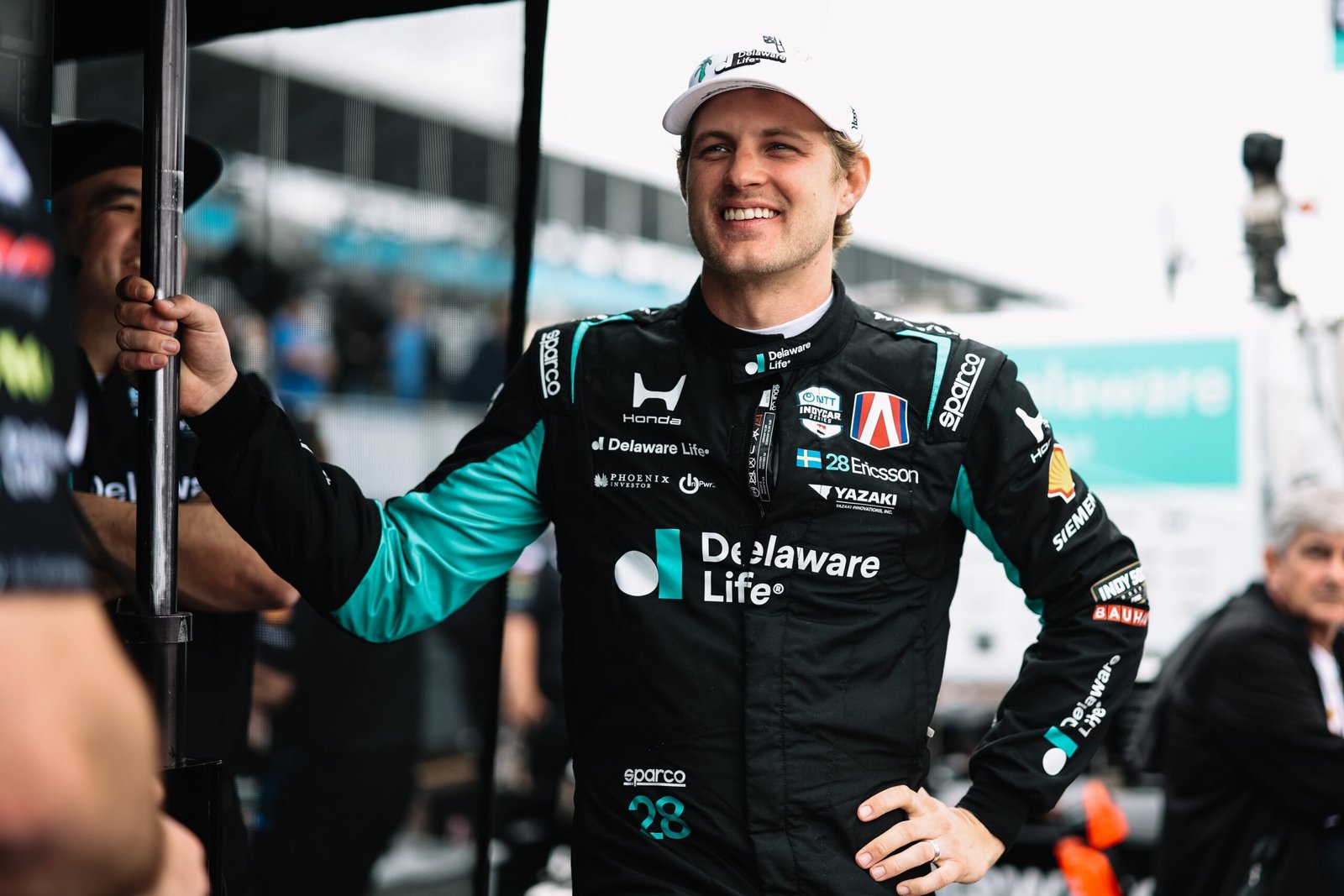
After a 2025 season he openly described as “super disappointing and frustrating,” Ericsson delivered one of the most controlled and convincing performances of his recent IndyCar career. Guiding the No. 28 Delaware Life Honda for Andretti Global to a front-row start for the 2026 season opener, he did more than post a lap time. He made a statement.

“It was extremely important for me,” Ericsson said afterward. “I’ve been really pissed off last year with my performance… and I know I can do so much better.”
On a street circuit where margins are microscopic and confidence determines commitment, Ericsson looked like a driver who had found something again.
A Winter of Digging Deep
The headline result in St. Petersburg did not materialize by accident. Ericsson was candid about the work that preceded it.
“This winter it’s been a lot about digging deep, working extremely hard on all areas,” he explained. “It just feels really, really good to come out and show that today.”
The most revealing part of his reflection centered on confidence. Not setup tweaks, not strategy changes, not external factors. Just pure confidence.
“Mental side,” he said when asked what needed to be addressed in the offseason. “I felt like I lost confidence last year… I just didn’t drive with confidence. I didn’t drive like I know I should drive and can drive.”
In modern IndyCar, that distinction matters enormously. The IndyCar field is arguably the most competitive in global motorsport. The difference between advancing through qualifying segments and being eliminated early can be less than a tenth of a second.
St. Petersburg qualifying is rarely straightforward. The temporary street circuit evolves rapidly. Grip builds. Rubber changes. Traffic complicates clean laps. This year, NASCAR Truck Series rubber added another variable.
Ericsson ran in Group 1, where conditions were initially slick.
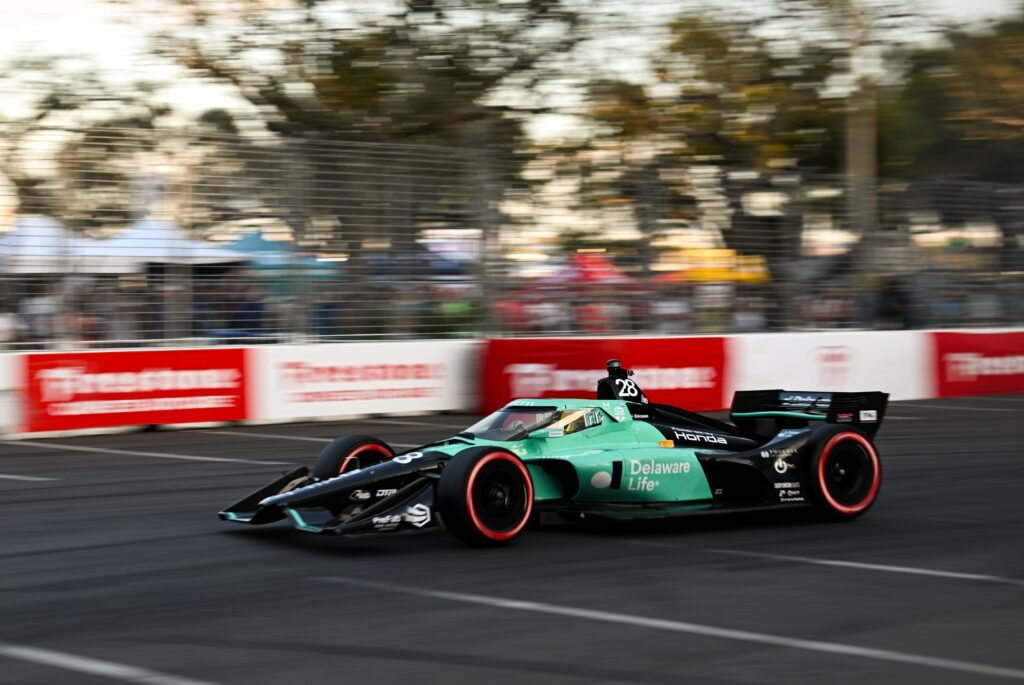
“It was a little bit more slick there to start with,” he said. “But pretty quickly already for Q2, there was a good level of grip.”
What stood out was his composure. He did not overdrive the car early. He did not chase the track evolution. Instead, he progressed methodically through each segment, adapting as grip improved.
“To go out in qualifying and do that through all the segments and put it on the front row feels really, really good.”
Execution in the Tightest Field Yet
Qualifying results often tell only part of the story. In 2026, the story is compression.
Just 0.14 seconds separated the top four drivers. That statistic alone underscores how unforgiving IndyCar competition has become.
“The field this year in INDYCAR is the toughest field, the most competitive field ever in my opinion,” Ericsson said. “There’s no bad drivers, no bad teams.”
In that environment, success hinges on execution.
“You need to execute in these races,” he added. “With the start, tire management, pit stop, pit sequence, there’s a lot of things that go on.”
But execution begins on Saturday. Front-row track position at St. Petersburg is not merely cosmetic. The tight Turn 1 complex, the flowing technical section from Turn 4 to Turn 9, and the narrow braking zones reward those who start near the front and avoid mid-pack chaos.
Ericsson knows this track. He has won here before. And as he pointed out bluntly: “I know how to get it done.”
Ericsson’s performance also reflected stability within Andretti Global. He specifically credited team leadership and the internal backing he received even during difficult stretches. “Dan has been my biggest supporter since I’ve been at the team,” he said. “There was no doubt from him… he had full confidence in me.”
That kind of support matters when results dip. In high-performance environments, drivers often feel pressure from every angle. Knowing that management maintains belief can create space to rebuild rather than react defensively.
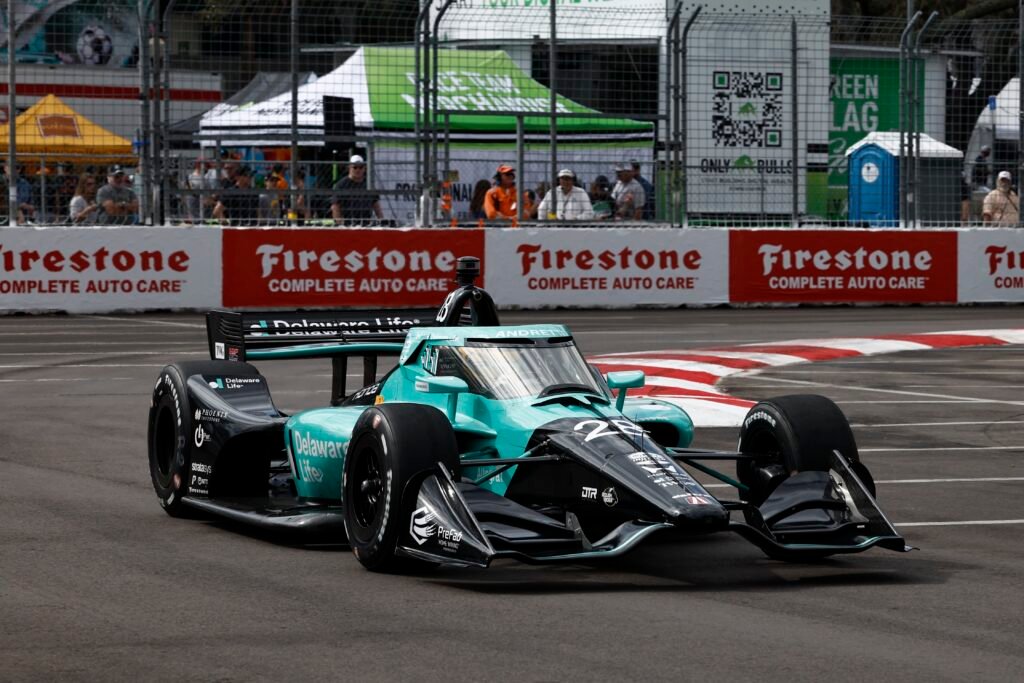
“It means a ton,” Ericsson admitted. Combined with offseason engineering adjustments and renewed internal alignment, the No. 28 program appears recalibrated.
From Frustration to Fuel
There was also a human element woven into the afternoon.
Ericsson wore a custom-designed hat created by 11-year-old Josiah from Peyton Manning Children’s Hospital.
“The hat is from Josiah… I hope he’s watching at home and is proud of me, and I’m proud of him.” It may seem like a small detail. But for a driver who openly discussed mental resets and rediscovering belief, that symbol carried emotional resonance.
Also one of the most striking aspects of Ericsson’s post-qualifying comments was the raw honesty in his language.
“I’ve been really pissed off last year with my performance,” he said. There was no attempt to sanitize the emotion. But frustration, when channeled correctly, becomes fuel.
Ericsson described 2026 as a “comeback year.” That phrasing matters. It suggests intention rather than hope. It signals that this front-row start is not a one-off result, but part of a larger correction.
Shine Under Pressure
Street circuits expose hesitation. Walls close in. Braking zones punish overconfidence. Grip evolves corner by corner. To thrive, a driver must balance aggression with clarity.
On Saturday in St. Petersburg, Marcus Ericsson did exactly that. He executed under pressure. He advanced through each qualifying phase without overreaching. He adapted to track changes. And he delivered when it mattered most.
The difference between a mid-pack start and a front-row launch may be measured in hundredths. But the difference between doubt and belief can define seasons.
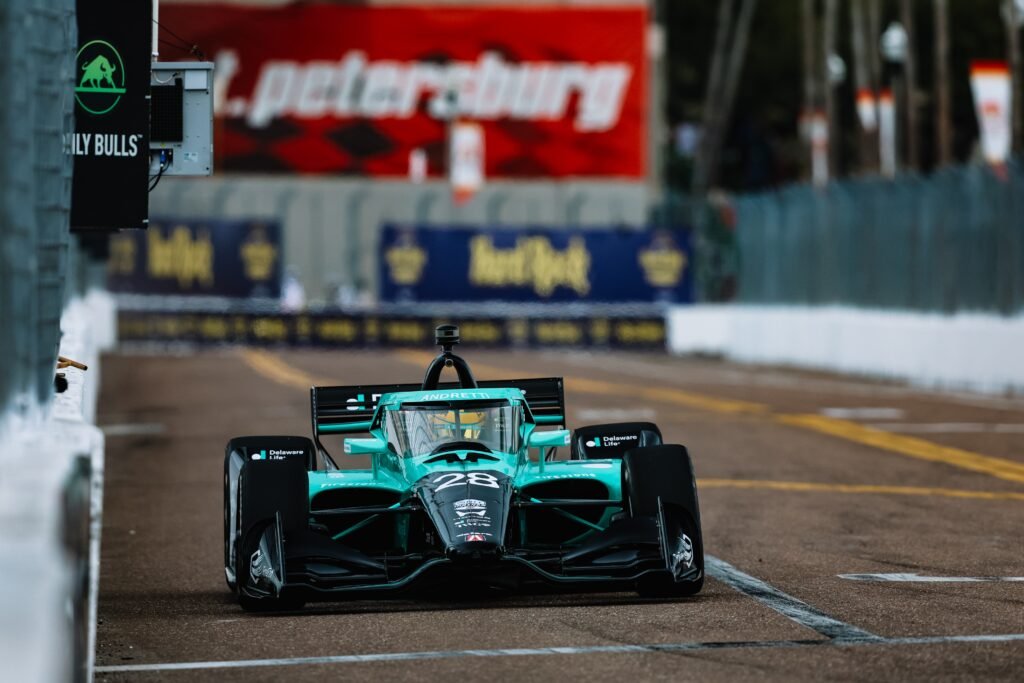
Ericsson acknowledged that the job is not finished. “It’s only qualifying,” he said. “We need to do it again tomorrow.”
That humility underscores the maturity behind the performance, but the message is clear. After a winter spent rebuilding confidence, Marcus Ericsson did not merely qualify well at the Firestone Grand Prix of St. Petersburg. He reminded the paddock – and perhaps himself – exactly how dangerous he can be when belief returns.
written by Philipp Kraus // Media Credit: Penske Entertainment