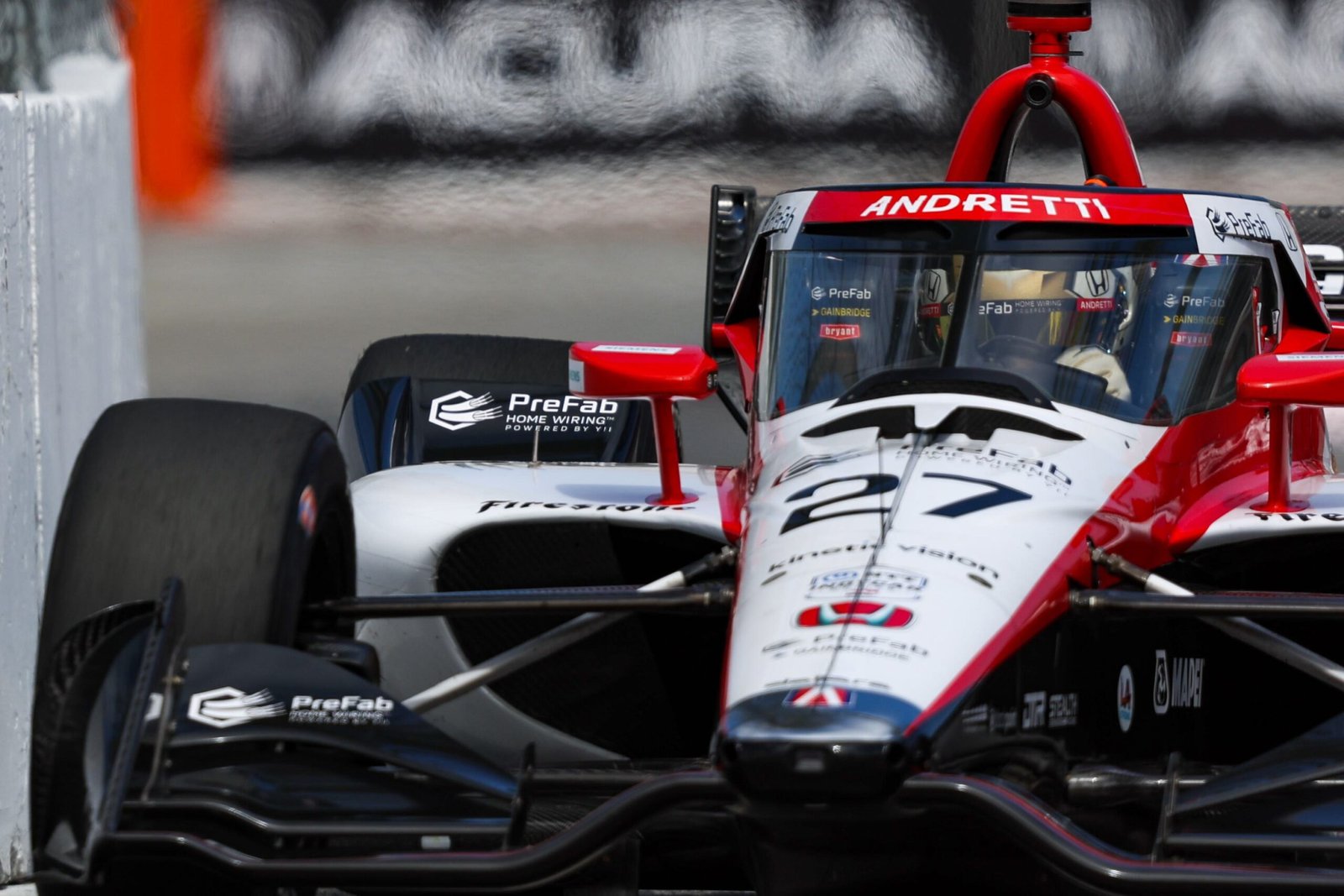


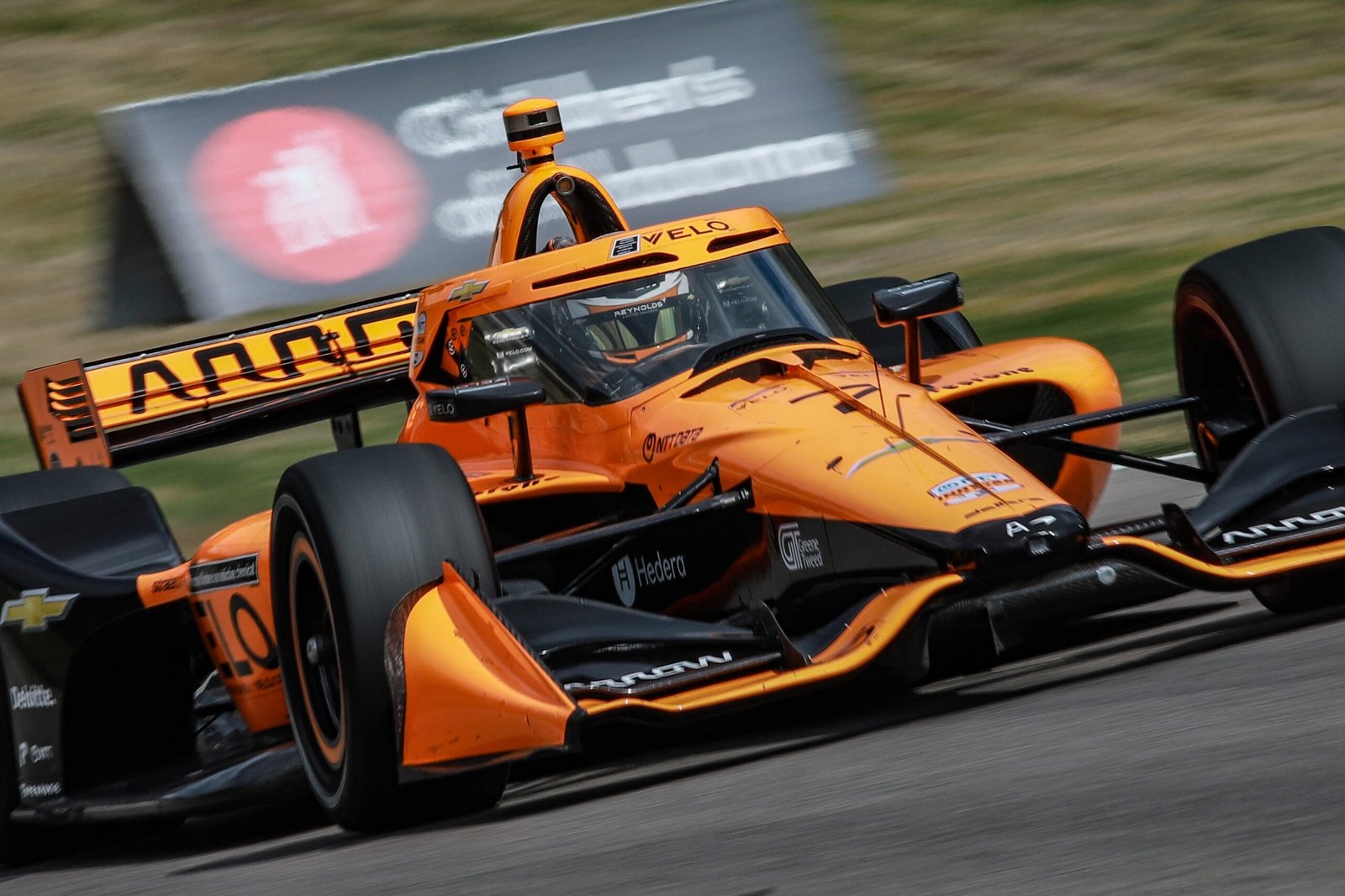
As the Acura Grand Prix of Long Beach approaches, Christian Lundgaard arrives in a position that feels both familiar and quietly different. The early phase of the 2026 NTT INDYCAR SERIES season has already delivered two podiums, reinforcing a trajectory that has been building since last year, when the Dane established himself as one of the most consistent front-runners in the field.

And yet, listening to Lundgaard speak, there is little sense of urgency, no overt declaration of title ambitions or breakthrough expectations. Instead, there is something more deliberate, a belief in process over outcome.
“I think we’ve really just seen the beginning of the season, how momentum really plays an effect,” he says.
Momentum, in Lundgaard’s case, is less about raw results and more about continuity. A strong Barber weekend, a return to a track where he finished on the podium last year, and a schedule beginning to settle into rhythm all contribute to a sense that things are aligning, even if not everything is yet in place.
That restraint defines his approach heading into Long Beach. Where others might frame the weekend in terms of victory, Lundgaard frames it in terms of refinement.
“We need to go out there and improve our package from last year and the results will come.”
It is a subtle but important distinction. For Lundgaard, results are not something to be forced. They are something that emerges when enough smaller elements fall into place.
A season finding its rhythm
That philosophy becomes clearer when he reaches for a comparison outside of motorsport. Over the off-week, Lundgaard spent several days on the golf course, a setting that, for him, mirrors the rhythm of a racing season more closely than one might expect.
“If you make a bogey on the first hole, you shouldn’t panic… the mindset should always be to put yourself in a great position and the putts will fall eventually.”
It is an analogy that speaks to patience, but also to control. In IndyCar, where margins are small and weekends are often shaped by fine details, that mindset offers a counterbalance to the instinct to overreach.
There is, however, one area where Lundgaard is clear that patience alone is not enough. While his race pace has consistently placed him among the strongest drivers on Sundays, Saturdays remain the unresolved piece of the puzzle.
“We’re capable of producing great race cars on Sunday, but we need to be better on Saturday.”
The issue is not easily defined. It is not a single setup direction or a recurring mistake, but rather a pattern of marginal misjudgments, track evolution, setup changes, decisions made in pursuit of small gains that ultimately move the car away from its optimal window.
“It’s not as simple as a yes-and-no answer… we’ve taken some wrong turns.”
In a field led by drivers like Alex Palou, those small deviations matter. Palou remains the benchmark, not necessarily because he is untouchable, but because he is relentlessly efficient. Even when not winning, he remains in position, accumulating points and applying pressure.
For Lundgaard, that dynamic is not discouraging. If anything, it sharpens the focus.
“I wouldn’t say it’s demoting. I’d almost say it’s more motivating.”
There is also a sense that the competitive landscape is shifting. Where previous seasons often saw a clearer gap to the front, Lundgaard believes the field is closing in.
“There’s cars that are a lot closer to him on performance than prior years.”
The missing piece on Saturdays
That proximity creates opportunity, but it also increases the cost of mistakes, something Lundgaard experienced firsthand at Barber. A small miscommunication during a pit stop turned a potential victory into a lesson in execution.
“We lose and we win as a team.”
The response was measured, almost understated. No blame, no visible frustration, just an acknowledgment of what could have been done differently. It is another indication of a driver who is evolving not just in speed, but in perspective.
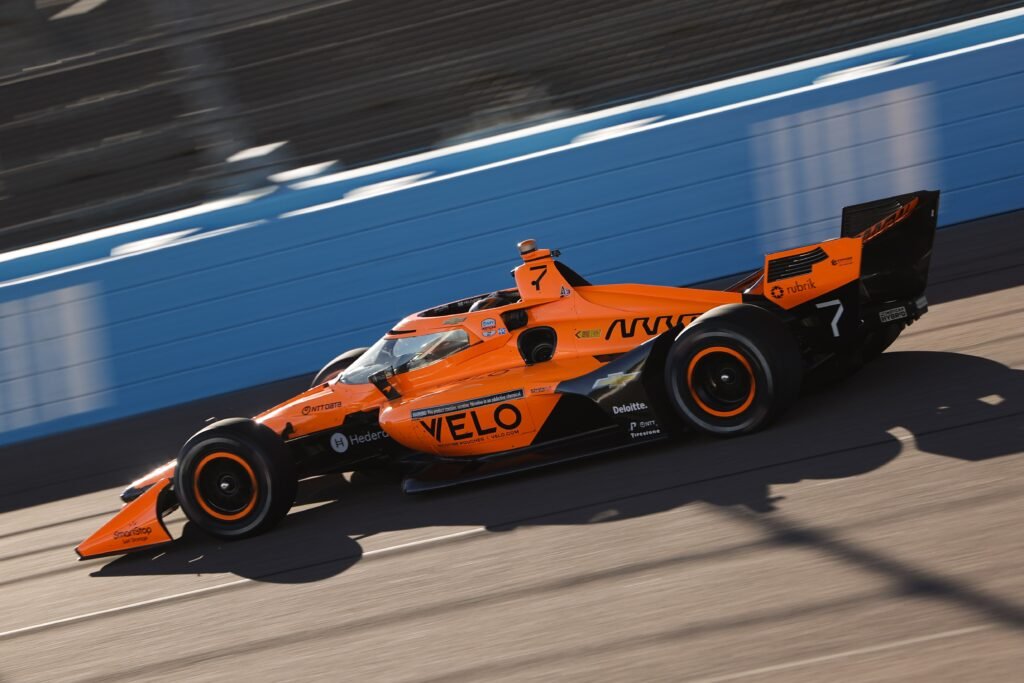
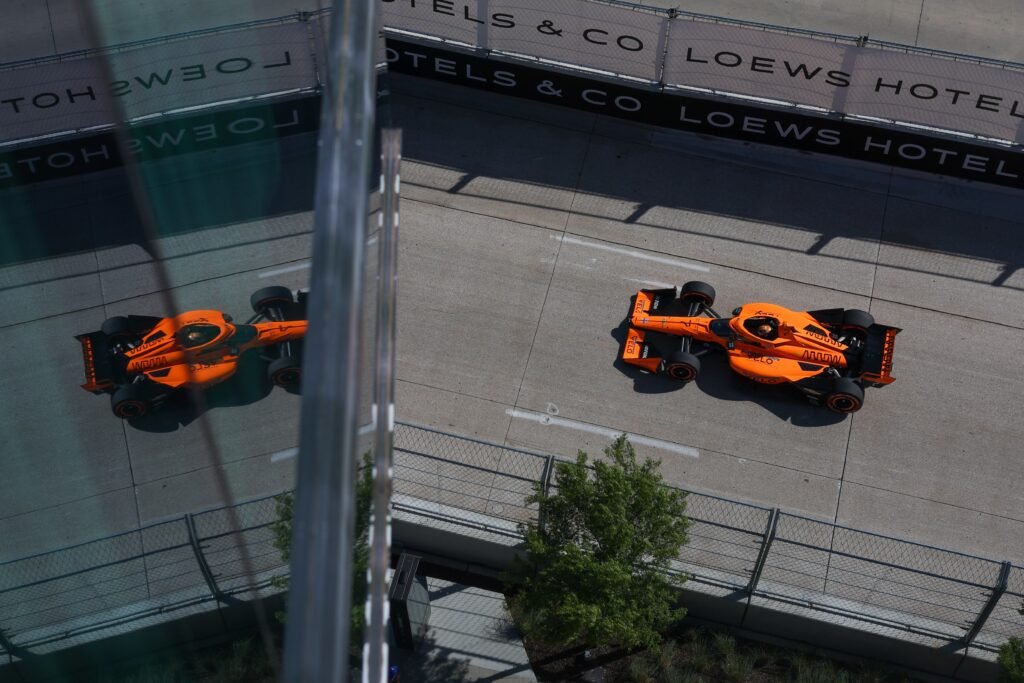
That perspective will be tested again at Long Beach. The street circuit, often described as one of the most demanding on the calendar, leaves little room for error. It rewards precision, but also composure, qualities that Lundgaard has increasingly demonstrated.
After last year’s chaotic qualifying session, which saw him crash and start further back before recovering to a podium, the objective this time is simpler.
“The main priority… is just have a smooth, successful weekend.”
There is no talk of redemption, no narrative of unfinished business. Instead, the focus returns to the same principle that has shaped his season so far: execute well, stay in position, and allow the outcome to follow.
Whether that approach translates into a first win of the season, or something more sustained over the course of the championship, remains to be seen. But what is becoming increasingly clear is that Lundgaard’s rise is not being driven by sudden breakthroughs or dramatic shifts.
It is happening in increments, through consistency, through reflection, and through a mindset that resists the urge to force what is not yet ready.
And in a championship where the margins are defined by exactly those qualities, that may prove to be the most significant advantage of all.
written by Philipp Kraus // Media Credit: Penske Entertainment