

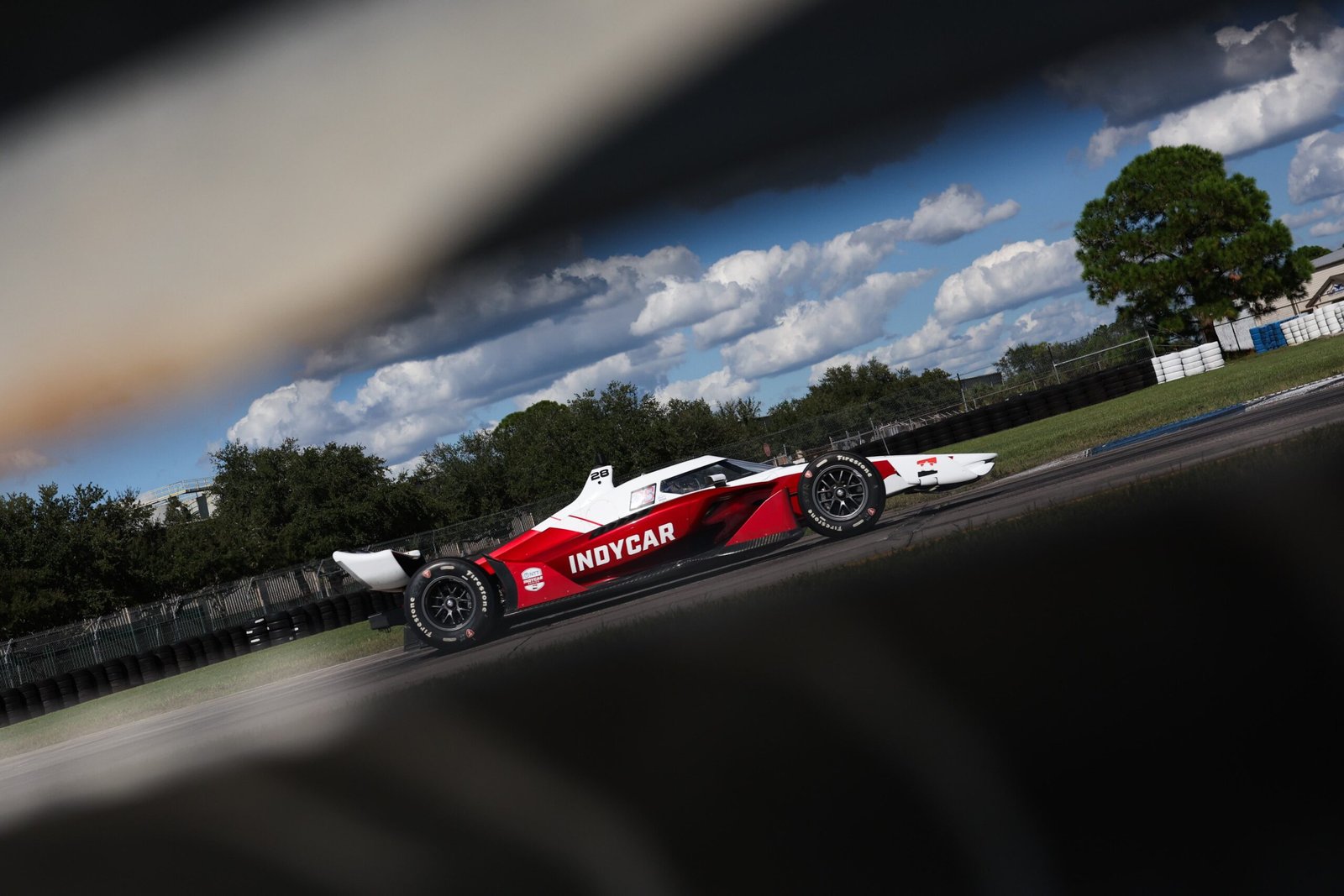
IndyCar’s next-generation IR-28 continues to make progress ahead of its 2028 debut. Alexander Rossi completed an impressive 134 laps at Sebring International Raceway on Tuesday, October 13, putting the new chassis through its most extensive single-day test yet at the Florida circuit. And judging by his first impressions, there’s plenty to be excited about.

IndyCar’s future is looking increasingly promising. After Alex Palou kicked off the two-day Sebring test on Monday, it was Alexander Rossi’s turn to climb behind the wheel of the new IR-28 on Tuesday. The 2016 Indianapolis 500 winner wasted little time getting down to business, completing 134 laps around Sebring’s notoriously unforgiving outer loop. That’s more than three times the number of laps Palou managed on Monday.
And while outright speed wasn’t necessarily the main priority, the latest test provided engineers with another valuable opportunity to understand how the new chassis behaves when pushed over a demanding circuit for an extended period. Rossi, who races full-time for Chevrolet-powered ECR, was clearly impressed by what he experienced.
“This car, in so many ways, is a pretty big upgrade from what we have,” Rossi said. That’s a promising assessment from someone who knows the current IndyCar package extremely well.
From Indianapolis to Sebring: The IR-28 Faces a Different Challenge
The IR-28 development program began in August and September at Indianapolis Motor Speedway, where Rossi and Palou tested the car on both the 2.439-mile, 14-turn road course and the famous 2.5-mile oval. Those sessions provided the first opportunities to evaluate the new chassis and make sure its fundamental systems worked as intended.
But Indianapolis and Sebring couldn’t be more different. While IMS offers relatively smooth asphalt, Sebring is famous for its bumps, pavement changes and mixture of asphalt and concrete. It’s exactly the kind of place where engineers can discover problems that might remain hidden at a smoother circuit. And with temporary street circuits making up one-third of the IndyCar schedule in 2026, that kind of testing is particularly important.
Rossi explained why Sebring has become such a popular destination for IndyCar teams: “What’s good about this place is it’s the poorest-quality surface that you can have in a permanent road course.”
Although Sebring generally provides more grip than a typical street circuit, its bumps and changing surfaces make it a useful simulation of the challenges drivers encounter on temporary tracks. That gives the development team an opportunity to examine how the IR-28 responds to the conditions it will eventually face at venues across the IndyCar calendar, because a car that feels fantastic on smooth asphalt still needs to work when the surface gets rough.
Rossi Completes 134 Laps as Reliability Takes Center Stage
Tuesday’s test was less about ticking boxes and more about putting the IR-28 through a realistic day of running. According to Rossi, much of the initial systems checklist had already been completed during the earlier Indianapolis sessions. The focus at Sebring was different.
Rather than concentrating on individual functions, engineers wanted to understand how the entire package performed over a longer period. The instructions to Rossi were refreshingly straightforward.
“Run the car as if it’s your race car.”
That meant driving the IR-28 normally and allowing any potential weaknesses to reveal themselves. After all, there’s only so much engineers can learn from carefully controlled test procedures. Eventually, a race car needs to be driven like a race car, and that’s precisely what Rossi did. His 134 laps added considerably to the mileage accumulated during the development program, particularly when combined with Palou’s 43 laps on Monday.
Across the two days at Sebring, the IR-28 completed a total of 177 laps. That mileage provides valuable information about durability, consistency and how the car’s systems cope with repeated loads on one of the roughest circuits used for IndyCar testing. Rossi described the purpose of the session as finding out whether the new car could perform through a two-day test in the same way as the current machine. It’s not the most glamorous part of developing a new chassis, but it’s essential: Finding a minor issue during testing is considerably better than discovering it during a race weekend in 2028.
A Major Step Forward in Cockpit Cooling
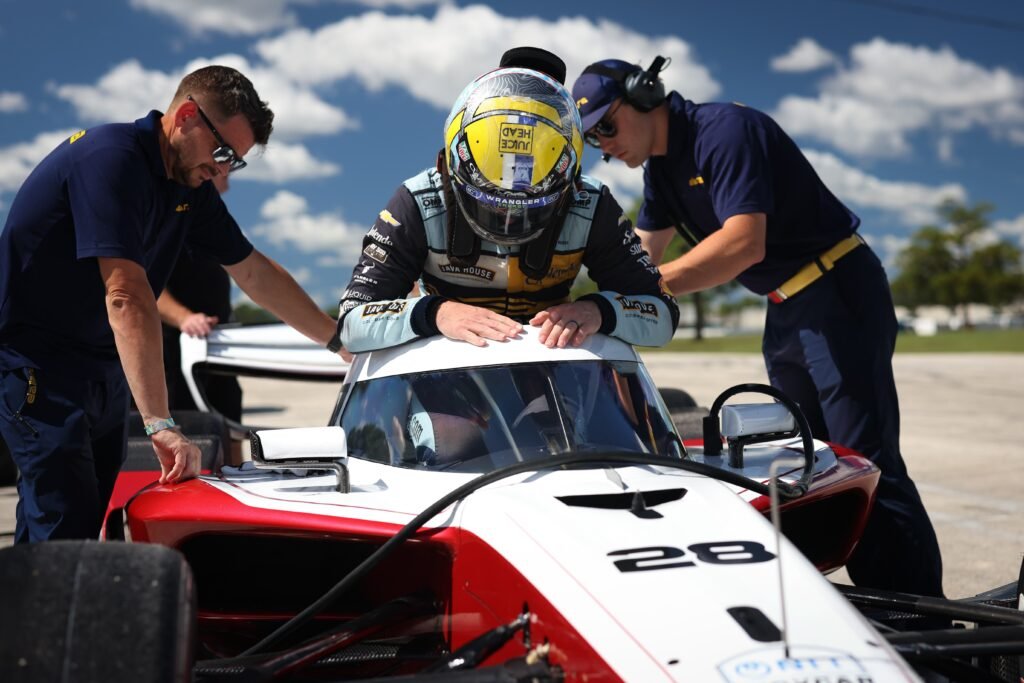
One of the most encouraging developments from the Sebring test was the improvement in driver comfort: Cockpit cooling has been an important subject in IndyCar since the introduction of the aeroscreen in 2020. Although the aeroscreen significantly improved driver protection, it also created new challenges when it came to airflow and cockpit temperatures. The current chassis required additional cooling solutions to be incorporated into an existing design. With the IR-28, engineers have been able to approach the problem from the beginning, the new car features cooling ducts integrated into its bodywork, allowing airflow to be managed more effectively. Palou had already praised the improvements following Monday’s running and Rossi was equally enthusiastic after his session.
“Cooling-wise, we made a pretty big step in this test, in particular,” Rossi said. He described the improvement as “night-and-day different” in terms of cockpit comfort and drivability. IndyCar drivers regularly compete in hot conditions, sometimes spending several hours inside the cockpit while dealing with intense physical demands. Better airflow won’t necessarily grab headlines in the same way as more horsepower or a striking new design. But for the people actually driving these cars, it could make an enormous difference, and if drivers can remain more comfortable throughout a race, that may also help them maintain concentration and consistency.
Cooling wasn’t the only area where Rossi noticed improvements. The American also praised the IR-28’s appearance, engineering and handling characteristics.
“First of all, visually, it’s an incredible race car to look at,” he said. He went on to highlight the additional grip available in high-speed corners, describing the car as enjoyable to drive and exceptionally well engineered. That’s another encouraging sign for the development program.
The current IndyCar chassis has been around for a long time, evolving through numerous technical updates and aerodynamic changes. The IR-28 represents an opportunity to introduce a new package designed around the series’ future requirements, and while it’s still too early to draw conclusions about outright performance, Rossi’s comments suggest that the driving experience is already moving in a positive direction.
Of course, more grip doesn’t automatically guarantee better racing. That will depend on how the finished aerodynamic package behaves when multiple cars are running close together, but the early feedback from both Rossi and Palou suggests that the new car has a solid foundation.
Why Driver Feedback Matters So Much
Developing a new IndyCar chassis involves far more than simply producing a car that can complete laps. It needs to perform across three very different disciplines: permanent road courses, temporary street circuits and high-speed ovals.
Each type of circuit presents its own challenges, a setup that works perfectly at Indianapolis might behave very differently over the bumps at Sebring. That’s why experienced drivers like Rossi and Palou are so valuable during the early stages of development. Both have raced extensively with the current IndyCar chassis, giving them a useful reference point when evaluating the IR-28.
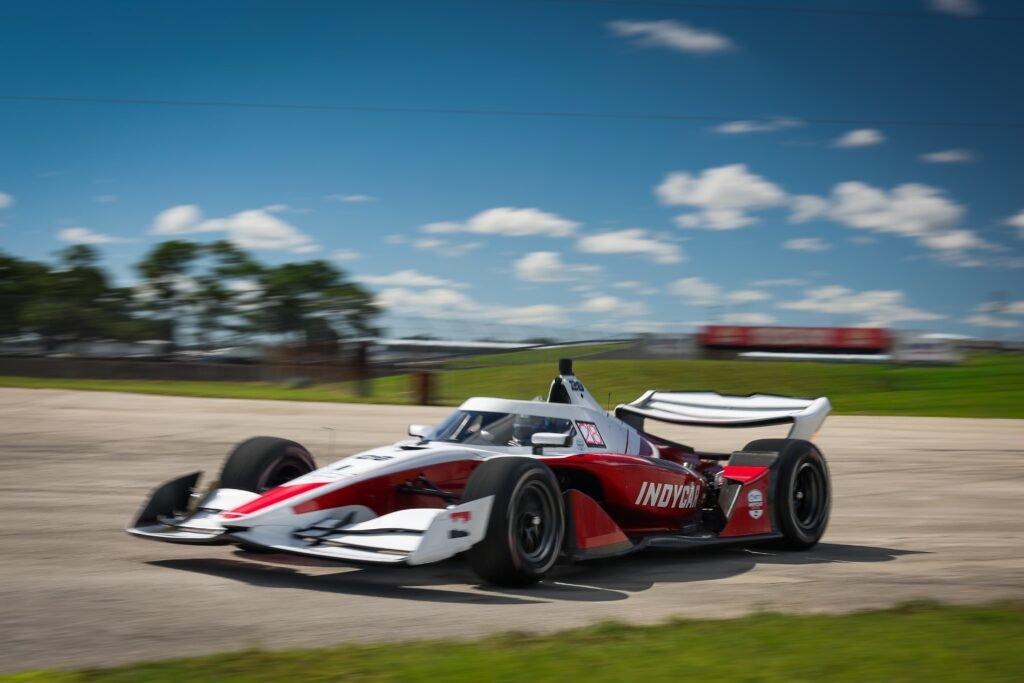
They can identify differences in steering feel, braking performance, cockpit comfort and how the car responds to changing track conditions. They can also provide feedback on characteristics that might not be immediately obvious from engineering data alone. Throughout the development program, Rossi and Palou have been working alongside Dallara and IndyCar officials to evaluate the new package. Their observations will help shape the improvements made before the chassis enters production, and with the competitive debut still scheduled for 2028, there’s time to address any problems that emerge.
The IR-28 Still Has More Development Ahead
Even after the successful Sebring running, the IR-28 remains a work in progress. The car has now been tested on the Indianapolis road course, the Indianapolis oval and Sebring’s rough outer loop, and each environment provides a different set of information. The finished racing package will need to work across the entire IndyCar calendar, including circuits with very different characteristics as Rossi made it clear that additional developments are already planned.
“There are more things that are scheduled to come as time comes that will allow this car to race and perform even better,” he explained. That’s particularly interesting because it suggests the current test specification isn’t necessarily representative of the final car that fans will see racing in 2028. Further changes could influence performance, drivability and the overall racing experience. For Rossi, the ultimate objective is straightforward: producing better racing for the fans.
The two-day Sebring test may not have featured the excitement of a race weekend, but it provided another important milestone for IndyCar’s future.
Palou completed 43 laps on Monday and Rossi added another 134 on Tuesday. Together, they accumulated 177 laps on a circuit designed to expose weaknesses in the new chassis. The feedback has been encouraging, particularly regarding cockpit cooling, high-speed grip and the overall driving experience.
Rossi’s comments also suggest that the IR-28 is already delivering noticeable improvements compared with the current car, but there is still a long way to go before the new chassis makes its racing debut. Engineers will continue refining the package, collecting data and working through any issues discovered during testing.
But one thing is becoming increasingly clear: The IR-28 isn’t simply about giving IndyCar a fresh-looking race car. It’s about building a better foundation for the series’ future. And after 134 demanding laps at Sebring, Alexander Rossi appears convinced that the project is heading in the right direction. The real test will come when the lights go out in 2028, but for now, though, IndyCar’s next generation is looking pretty exciting.
written by Philipp Kraus // Media Credit: Penske Entertainment