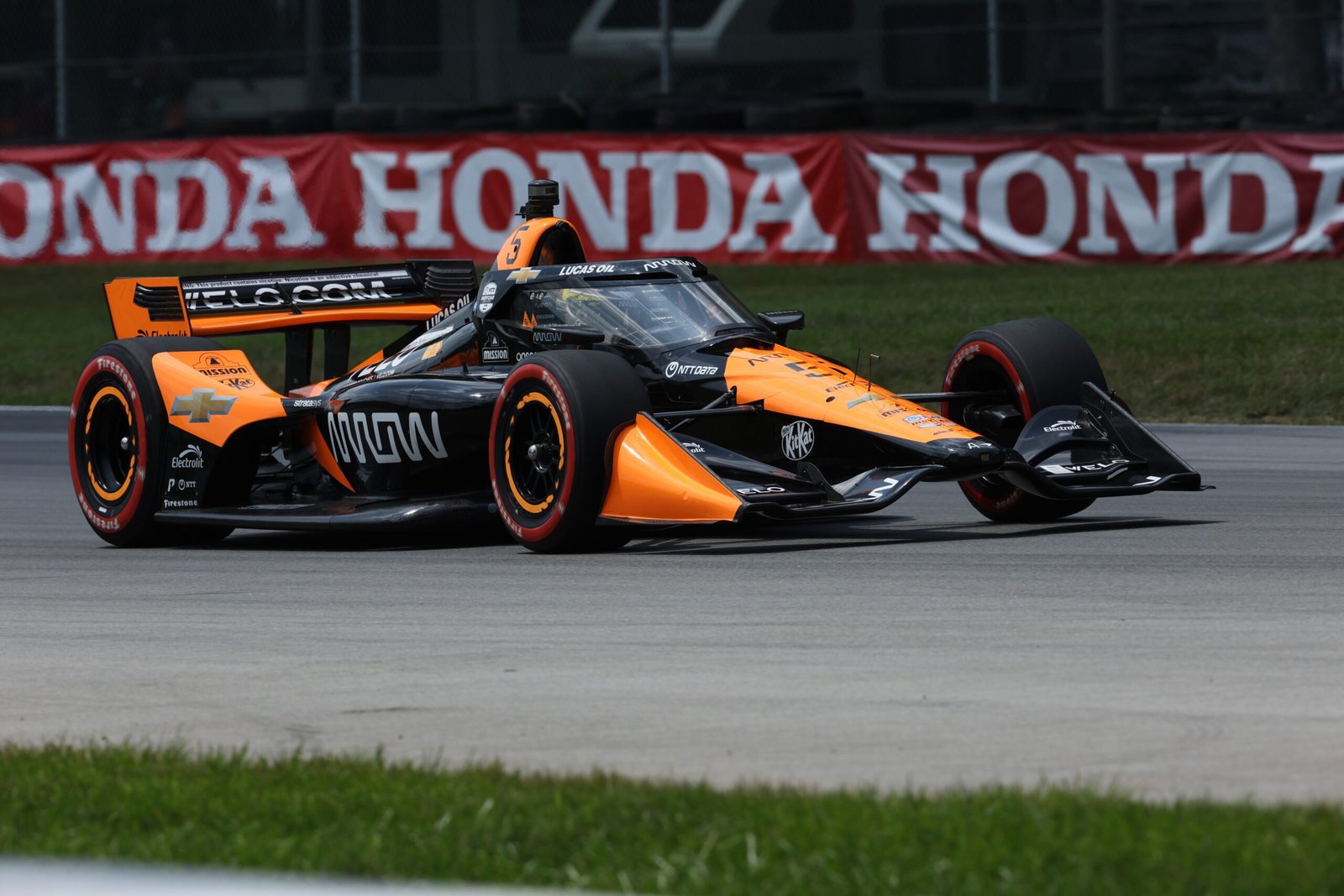


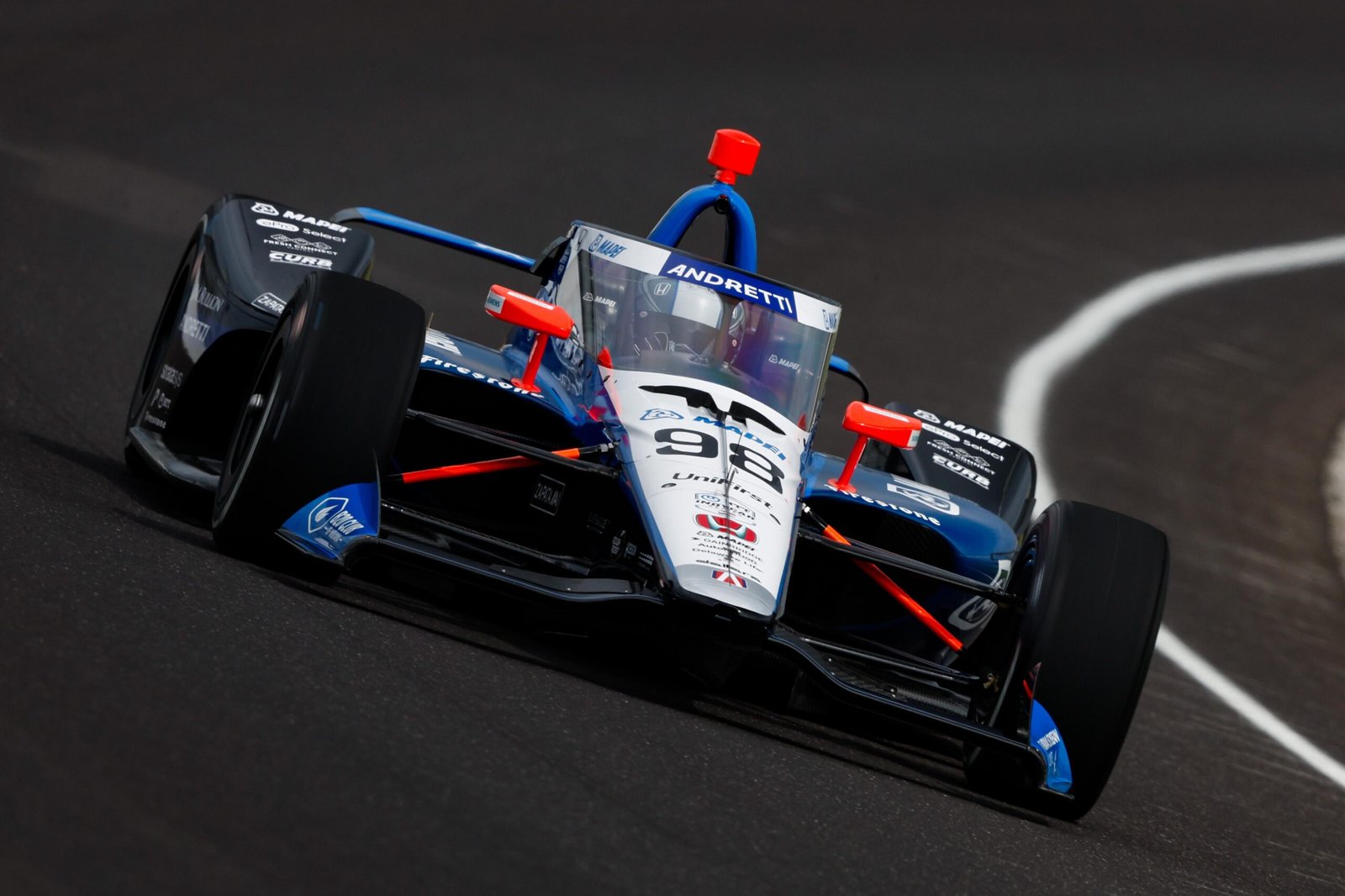
On October 29th 2025, Marco Andretti announced his retirement from motor racing after a career spanning over two decades. In this article, we will look back on his career while highlighting his Top 5 moments.

Marco Andretti was never just another driver in the IndyCar paddock. From the moment he first sat in a race car, his last name carried with it legacy, weight, and expectation. Born on March 13, 1987, in Nazareth, Pennsylvania, Marco was raised in a family that helped define American motorsport. His grandfather Mario Andretti is a global icon, an Indianapolis 500 winner and Formula One World Champion. His father Michael Andretti is one of the most successful drivers in IndyCar history. Marco grew up not only with racing in his blood but also with the pressure to carry forward the Andretti name in the highest form of open wheel competition in the United States.

After impressing in karting and junior series, Marco made the leap to the IndyCar Series in 2006 with Andretti Green Racing, the team run by his father. At just 19 years old, he delivered a stunning rookie season that remains one of the most dramatic debuts in recent memory. He nearly won the Indianapolis 500, leading on the final lap before being passed at the finish line by Sam Hornish Jr. in a breathtaking duel. His runner-up result by just 0.0635 seconds was both heartbreaking and electrifying. Later that year, he won his first and only road course race at Sonoma Raceway, becoming one of the youngest winners in series history and sealing the Rookie of the Year award. The hype was real. Many believed this was the start of a dominant career.
Struggles and Redemption
But motorsport is rarely predictable, and the following years proved to be a mix of highs and deep frustration. While Marco continued to display speed and aggressive racecraft, consistency often escaped him. Whether due to bad luck, strategic missteps, or small errors, he found it difficult to replicate his early success on a regular basis. Critics questioned whether he could deliver on the promise of his rookie year. At times, it seemed that the weight of the Andretti name created more pressure than opportunity.

His 2011 win at Iowa Speedway was a reminder of what he could achieve. That short oval victory highlighted his skill on tracks that reward bravery and instinct. It was a well-earned and emotional result that showcased his talent. Unfortunately, that race would be his final career win in IndyCar. Despite strong runs, especially on ovals, another trip to the top step of the podium would remain elusive.
Even so, Marco had several standout performances. His 2013 season was perhaps the most complete of his career, finishing fifth in the championship with consistent top ten finishes and competitive speed. In 2020, he delivered a career-defining moment when he won pole position for the Indianapolis 500. It was the first pole for an Andretti at the Speedway since 1987. Though he did not convert the pole into a win, the sight of Marco topping the charts during qualifying was a powerful reminder of his enduring potential.
Through all the ups and downs, Marco maintained a professional and committed approach to his career. He was respected in the paddock for his honesty, his loyalty to the family team, and his passion for the sport. While wins may have been limited, his contributions to Andretti Autosport and to IndyCar were undeniable.
Marco Andretti’s Top 5 Moments of his career
2006 : rookie podium at Indy 500
When the time for the Indy 500 arrived, for the 4th round of the 2006 IndyCar season, Marco Andretti was nowhere near the favourites. At just 19 years old he was making his debut in America’s greatest motorsport event. However he would not be alone for this ordeal. His father Michael came out of retirement just for the event. At the start he lined up at an honorable 9th place, hoping for a strong result. What came next was perhaps the greatest race of his life. His first half was quite uneventful but thanks to a solid drive and well timed pace car, he was able to race with the front runners on the closing laps. On lap 198 he passed his father for the lead, entering the last 2.5 miles trying to defend from Sam Hornish Jr., to no avail. The 0.0635 seconds margin at the finish line, the second closest at the time, was what separated Marco from eternal greatness, in what was nonetheless a stellar drive.
2010 : remontada at Indy 500
In 2010 the Indianapolis Motor Speedway once again proved to be Marco’s favourite hunting ground. He lined up on 6th row at the start, before completing a remontada. He steadily worked his way up the fiels, even leading at one point before having to refuel and hand back the lead to Dario Franchitti. After a final round of pit stops he was running in third when the caution came out for Mike Conway’s horrific crash. He was intitially classified in 6th at the flag but was reinstated on the podium, as Alex Lloyd, Scott Dixon and Danica Patrick had overtaken him under yellow flags, marking a third top 3 finish in his first 5 starts at the Indy 500.
2011 : Iowa 250 – a reminder of Marco’s talent
Originally qualified 17th, Marco had not much hopes going into race day. But on a track where speed, bravery and determination are the keys to success, he would remind everyone that he wasn’t just there because of his name. After a lenghty midfield battle he emerged as leader on lap 157. Race favourite Dario Franchitti quickly blew past him again but on lap 188 he was back in the lead, this time with a new rival, none other than Tony Kanaan. The last 48 laps were the scene of a captivating battle for the win between two fierce competitors with Marco coming out on top, as a victor, for what would be the final time in IndyCar. This race wasn’t just a win, it was a showcase of Marco’s talent and grit.
2013 : the season of maturity
2013 was Marco’s best season. He didn’t win a single race but his consistency brought him to 5th in the championship, thanks to 15 top tens in 19 rounds. He finished 3rd twice on street courses, St Petersburg and São Paulo. He also signed two pole positions on oval tracks, at Pocono and Milwaukee. Throughout the 19 races, Marco showcased good speed on all kinds of tracks, intelligent racecraft and bravery which allowed him to finish ahead most notably of reigning champion Ryan Hunter-Reay.
2020 : the last spark at Indy 500.
At the time of the 104th running of the Indy 500, Marco Andretti’s career was already going downhill. He had signed only three top 5s in the last four seasons and was used to fighting in the midfield. However, on qualifying days he once again proved he had speed and reminded the field of the driver he was, topping charts on both sessions, with an average of 231.068 mph over four laps, enough to secure pole position for the main event, the first for an Andretti named driver since his grandfather Mario in 1987. Additionally his gap with second placed Scott Dixon is the third closest in the series’ history. Unfortunately, Marco couldn’t convert his pole on race day as he didn’t even lead a single lap on road to a rather anonymous 13th position. This unexpected pole position marked the end of Marco’s runs at the front, in the late years of his exceptional career.
A Career Beyond Numbers
Marco’s career cannot be measured by victories alone. The expectations placed upon him were enormous. He was never just driving for himself, he was upholding a family legacy that shaped the sport. That burden is difficult for anyone to carry, let alone in the spotlight of one of the most competitive racing series in the world.

He raced in 253 events, started 20 times at the Indianapolis 500, and claimed two race wins in IndyCar. Yet, his impact was far greater than the statistics might suggest. He was a fixture of the grid, a bridge between generations, and a symbol of commitment to open wheel racing in America. He brought fans into the sport, and his name attracted attention even from those who were not diehard IndyCar followers.
Off the track, Marco began building a future beyond full-time competition. He engaged in other racing ventures, including sports cars and even appearances in NASCAR’s Truck Series. He took on a more selective racing schedule after 2020, focusing primarily on the Indy 500 while also exploring business opportunities and supporting Andretti Autosport’s development.
When he announced his retirement from IndyCar racing in 2025, it marked the end of a major chapter in the series. For the first time in decades, the iconic Andretti name would not be on the grid as a driver entry. For fans and the paddock alike, it was a moment of reflection and appreciation.
Marco’s exit comes at a time when IndyCar is entering a new era. With international drivers, new manufacturers, and evolving technology, the sport is growing. But Marco Andretti’s presence served as a reminder of its roots, of the families, the history, and the personal connections that make IndyCar so unique.
Now retired from driving, Marco is likely to continue influencing the sport through Andretti Global and other projects. Whether mentoring young drivers, participating in team leadership, or simply enjoying life outside of the cockpit, he remains an ambassador for IndyCar and American racing.
Legacy of a True Racer
Marco Andretti’s career was complex, emotional, and very human. He came into the sport with sky-high expectations and a famous last name. He experienced crushing near misses, moments of triumph, and long periods of struggle. But through it all, he never gave up. He showed resilience, passion, and love for the craft.

In a sport where results often define legacies, Marco’s story stands out. He will be remembered not just for what he did, but for who he was: a proud competitor, a representative of a legendary family, and a driver who inspired thousands with his heart and perseverance. As IndyCar looks toward the future, Marco Andretti’s name will always remain close. His impact is woven into the fabric of the series. Every time a driver rolls off pit lane at Indianapolis, there is a piece of Andretti history in motion.
He will be missed, but never forgotten.
written by Mathurin Viguier & Philipp Kraus / Media Credit: Penske Entertainment