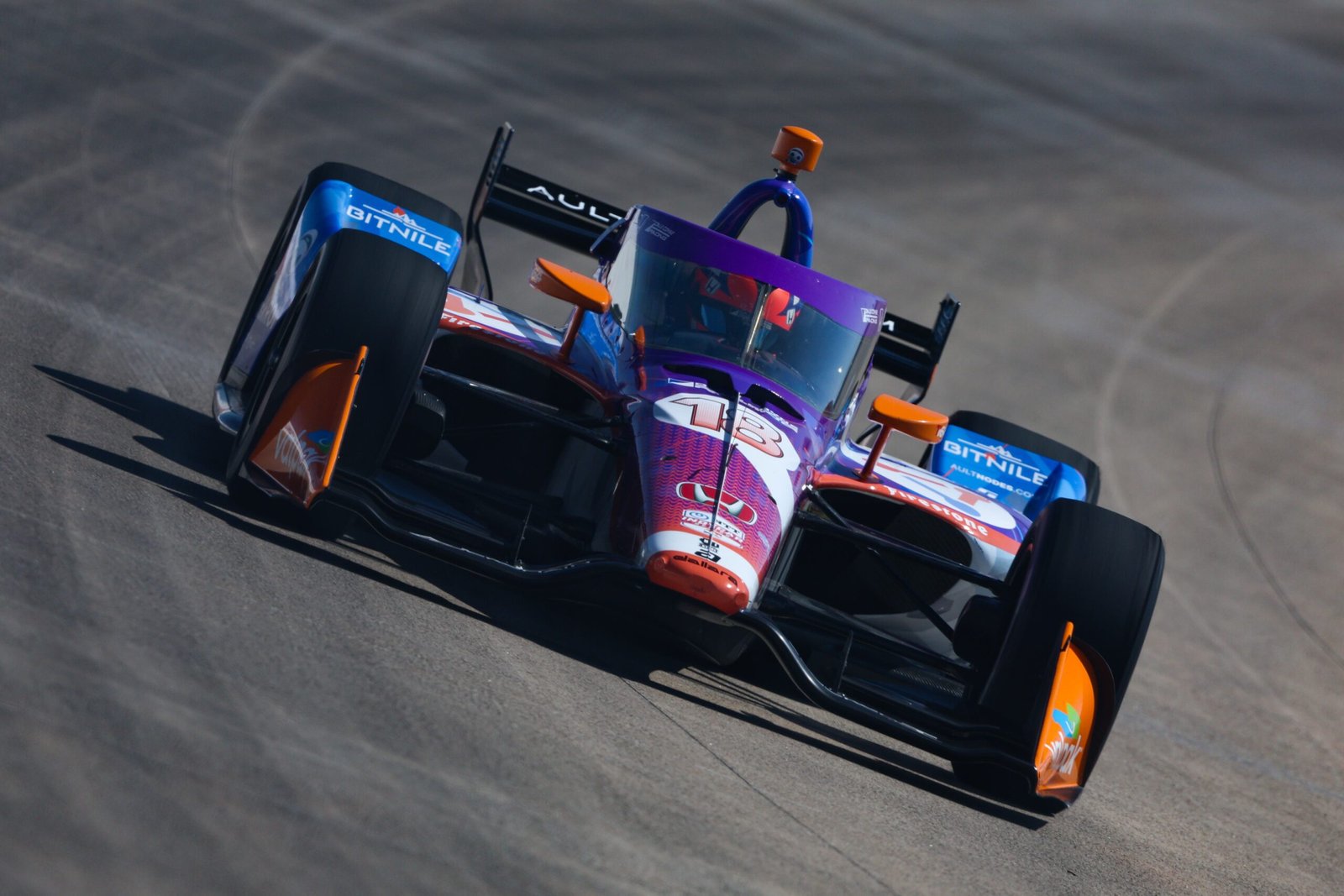


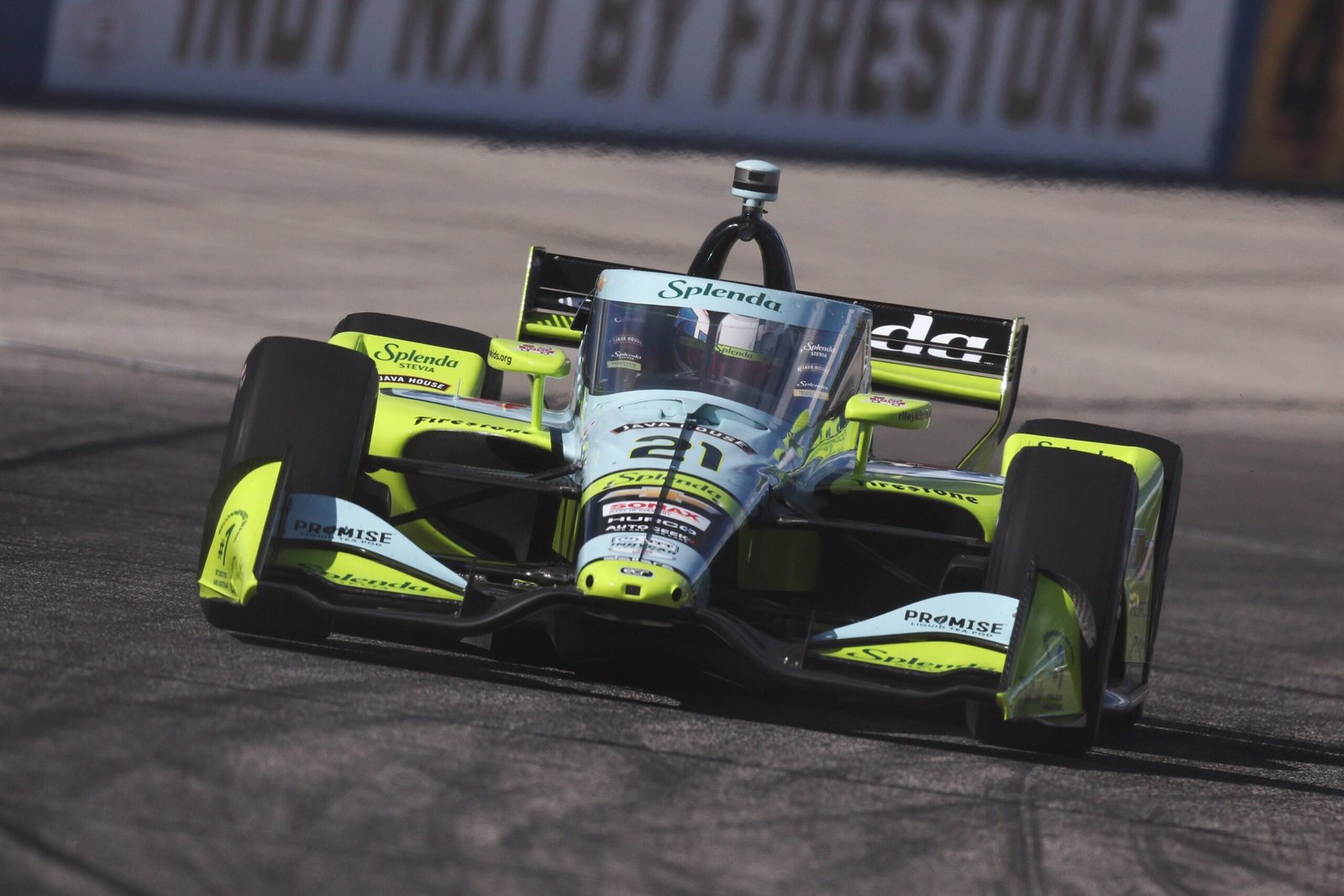
In racing, numbers are more than just identifiers on the sidepods, they carry stories, legacies, and memories. For the Ed Carpenter Racing team, the number 21 has become a symbol of talent, resilience, and occasional brilliance in the fiercely competitive world of IndyCar.

On this 21st day of our Advent calendar, we celebrate three unforgettable victories earned under the #21 banner, each by a different driver, each on a different kind of circuit, and each representing a key chapter in ECR’s journey.
These triumphs tell a story not just of one car, but of an underdog team’s ability to punch above its weight when everything aligns.
1. Josef Newgarden’s Breakthrough at Iowa (July 10, 2016)
The first of the three latest triumphs for car #21 came at the short oval of Iowa Speedway in the summer of 2016. It was more than just a win, it was a statement of dominance, resilience, and potential.
At the time, Josef Newgarden was still seen as a rising talent, having just joined Ed Carpenter Racing for the season after building his reputation with Sarah Fisher Hartman Racing.
In June, Newgarden had suffered a brutal crash at Texas that left him with a broken hand and clavicle, injuries that would sideline many drivers for weeks. But just three races later, he returned to the cockpit of the #21 Chevrolet, bandaged and braced, with something to prove.
Iowa, a punishing 0.875-mile bullring, is known for its relentless pace and demanding nature. In one of the most dominant displays in recent IndyCar history, Newgarden led a staggering 282 of 300 laps, lapping almost the entire field in the process.
He sliced through traffic with surgical precision, setting a blistering pace that left even veterans like Scott Dixon and Will Power chasing shadows.

It was the first win of the #21 car in Ed Carpenter Racing colors and Newgarden’s third career victory, but it resonated like a breakthrough. For ECR, it confirmed their ability to build a winning package even as a smaller, single-car operation.
For Josef, it laid the groundwork for his move to Team Penske and future championships. And for the #21, it was the beginning of a new era.
2. Rinus VeeKay’s First Career Victory at Indianapolis (May 15, 2021)
Fast forward to 2021. The world was still adjusting to post-pandemic normalcy, but on the track, a new star was emerging: Rinus VeeKay.
The young Dutchman had joined ECR in 2020, showing flashes of brilliance in his rookie season. But it was in his second year, with #21 on the car, that he truly arrived.
The setting? The IMS Road Course, home of the GMR Grand Prix, a technical, flowing circuit that winds through the infield of the legendary Indianapolis Motor Speedway.
On a warm May afternoon, VeeKay delivered a performance that combined youthful fire with veteran composure.
After qualifying third, he stayed in the lead pack through the early stages, keeping pace with polesitter Romain Grosjean. On Lap 45, VeeKay made his move, using a clever alternate strategy and a bold overtake to seize the lead.
From there, he never looked back. VeeKay led 33 of the final 38 laps, holding off a charging Grosjean and a field of experienced contenders to claim his maiden IndyCar win.
It was a historic day: VeeKay became the first Dutch winner in IndyCar since Arie Luyendyk and gave Ed Carpenter Racing its first win in five years.

The #21 car had returned to Victory Lane, not on a short oval this time, but on the hallowed asphalt of Indy’s road course, a place where talent and bravery shine.
More than just a win, it was a glimpse of the future. VeeKay’s triumph signaled a new era for ECR and confirmed that the team could still develop young talent into race winners.
3. Christian Rasmussen’s Breakthrough at the Milwaukee Mile (August 24, 2025)
The most recent chapter in the story of the #21 car was written in 2025, and fittingly, it came at one of the most storied tracks in American motorsport: the Milwaukee Mile.
Returning to the schedule in 2024 after a long absence, the 1-mile oval delivered a perfect platform for hard, old-school racing, and a new IndyCar winner in 2025.
That winner was Christian Rasmussen, the Danish driver who had steadily climbed the Road to Indy ladder with titles in USF2000 and Indy Lights (now INDY NXT).
Joining Ed Carpenter Racing in 2025 as a full-time rookie, Rasmussen had spent much of the season quietly learning and progressing. But at Milwaukee, everything came together.
Rasmussen and the #21 car were fast from the moment the green flag dropped. He qualified in the top five, but it was his consistency over the race’s 250 laps that stood out. While more experienced drivers faltered on tire wear and traffic management, Rasmussen kept his cool and executed a flawless pit strategy.
In the closing stages, a late caution brought the field back together, setting up a tense shootout. Restarting from second with just 10 laps to go, Rasmussen launched a daring move on the outside of Turn 1 and cleared the leader by Turn 3, a maneuver that drew gasps from the crowd and praise from veterans.
From there, he pulled away and crossed the finish line to secure his first IndyCar win, marking another milestone for ECR and for the #21.
This victory carried special significance. It wasn’t just about breaking a four-year drought for the car, it was about ushering in a new generation.
Rasmussen joined Newgarden and VeeKay as the third driver in 10 years to win in the #21 for Ed Carpenter Racing.

The win also placed Rasmussen firmly on the radar as a driver to watch, proving that the ECR program, particularly with the #21, remains one of the best places for young talent to thrive.
The #21 Legacy: Talent, Opportunity, Triumph
From Newgarden’s domination at Iowa, to VeeKay’s coming-of-age moment at Indy, to Rasmussen’s fearless charge at Milwaukee, the story of the #21 car is one of evolution and opportunity.
It has become something of a proving ground, a seat where up-and-coming drivers can showcase their skills, learn the intricacies of IndyCar, and make their first mark on the sport.
Ed Carpenter Racing, known for its underdog spirit and technical tenacity, has consistently given those drivers the tools to shine.
Each win has come under different circumstances, on different types of circuits, ovals, road courses, and short tracks, emphasizing the versatility and potential of the #21 machine.
As we open the 21st door of this year’s Advent calendar, these victories remind us of the magic that can happen when preparation, talent, and opportunity align.
While bigger teams may dominate the headlines, the #21 car stands as a symbol of how passion and perseverance can still win in IndyCar and how stars are often born in the most unexpected places.
Looking Ahead
The story of the #21 car is far from over.
With Christian Rasmussen now at the wheel and showing flashes of brilliance, the next chapter may already be underway.
Will he add to the legacy with another win in 2026? Or will the #21 become a launchpad for yet another future champion?

Only time and laps will tell.
But for now, we remember and celebrate three extraordinary victories, each etched into IndyCar’s rich tapestry. Victory Lane doesn’t care about team size or budget, only about who performs on the day.
And in the last 10 years, on three unforgettable occasions, #21 was the number that mattered most.
Happy 21st of December. See you on the grid.
written by Philipp Kraus // Media Credit: Penske Entertainment