

The split was one of the worst moments in America’s open-wheel racing history, and probably of motorsports in general.

The split, caused by disputes over costs and control, led to the downfall of open-wheel racing in America, damage so severe that even 17 years after CART and IRL merged to form the IndyCar Series, attendance for open-wheel events in the country isn’t as high as it once was.
To honor one of the weirdest periods in American motorsports, we look back at 16 moments from the IRL-CART split.
- The Start Of The Split.
In 1994, after many conflicts between the team owners, CART and USAC around the Indy 500, the rising costs of the championship, and the use of street circuits.
Tony George announced the Indy Racing League (IRL) as president of the Indianapolis Motor Speedway, the series, which would start racing in 1996, emphasized oval racing and a cost-controlled championship to ensure fair racing for all teams, despite their budget, aiming to be a direct rival to CART and their Indy Car World Series.
- The U.S 500.
In 1996, the IRL hosted its 3-race calendar, with the ending being the 80th edition of the Indianapolis 500. At first, the IRL wanted to set dates that wouldn’t collide with its rival’s calendar, in hopes that some or most IRL drivers would race in both championships.
Still, eventually, as the dates collided, most IRL entries consisted of new teams from Indy Lights, AIS, alongside familiar teams from CART like Menard and A.J. Foyt Racing, and two teams that entered only for the Indy 500 due to sponsorship commitments, Galles Racing and Walker Racing.
The “25/8” Rule they set for the race was controversial as IRL announced that the drivers in the top 25 of the IRL would be guaranteed to race in the Indy 500 and the remaining 8 would be set as open entries.
For CART, this meant an absolute lock-out of the most prestigious open wheel race in America, and so, in response, CART announced “The U.S 500” in the Michigan International Speedway and on the same day as the Indy 500.
- The 500 Mile Battle.
The clear winner in ratings was the Indy 500, as around 6 million households that year would tune in to ABC to watch IRL’s 500 race; meanwhile, CART’s U.S. 500 settled with 2 million households tuning in.
And while the numbers for the Indy 500 were very positive, they did see a decline in viewership from the last CART Indy 500, which was 8 million households, which, translating to viewers, would be around 12 to 15 million viewers.
The field featured names that would go on to become very well known in later years, like Tony Stewart and Michel Jourdain Jr., but most people believe the Indy 500 of 1996 had a much weaker field compared to the U.S. 500.
The race was won by Jimmy Vasser and had drivers like Roberto Moreno, Emerson and Christian Fittipaldi, as well as Alex Zanardi.
- The Championship Cars.
After many lawsuits, CART, at the time was branded as IndyCar, agreed to revert to Championship Auto Racing Teams under the condition that IRL would not use the name IndyCar until 2002.
This meant that the name IndyCar was not going to be used by any of the championships, and so, CART started to promote their cars as “Championship Cars”, a term used by USAC years earlier, and the IndyCar World Series changed it’s name to the CART World Series in 1997 and then to the CART Championship Series in 1998.
- CART’s expansion
Meanwhile, in the IRL, it started to face growing pains that sparked major concerns in fans and teams, the very upsetting sounds produced by normally aspirated engines, the chaos of the 1997 Indy 500 due to rain, and the abandonment by USAC due to incompetence.
While IRL suffered from these issues, CART raised enough money to buy Indy Lights through offering stock to the public; CART’s revenue grew massively through the model IRL tried to distance itself from.
- The Loss Of Oval Racing
While IRL’s calendar relied solely on ovals, CART tried to rely more on street circuits and permanent race tracks. In 1998, the 19-race calendar featured 8 ovals, and the fans of open-wheel racing in America started taking sides.

Those who wanted oval racing started siding with the IRL, while CART kept its core fan base at street circuits. The U.S. 500 also moved dates to avoid colliding with the Indy 500, moving it from May to July in 1997.
- IRL’s Expansion
1998 and 1999 were huge for the Indy Racing League; the competition started to get higher and higher, and while not as popular as CART, it managed to keep rivaling a championship that started to raise concerns due to the rising costs of keeping a team and the growing distance from its flagship race.
By the end of 1999, solidified by the Indy 500 of the same year, won by Kenny Bräck, started to show the massive improvement the series gone through.
- The New Millenium
The Indy 500 of the year 2000 will be remembered as CART teams started to take some distance from the championship and started to return to Indianapolis.
Well remembered is how Al Unser Jr. switched full-time to IRL from CART due to his desire to keep participating in the crown jewel of the IRL.
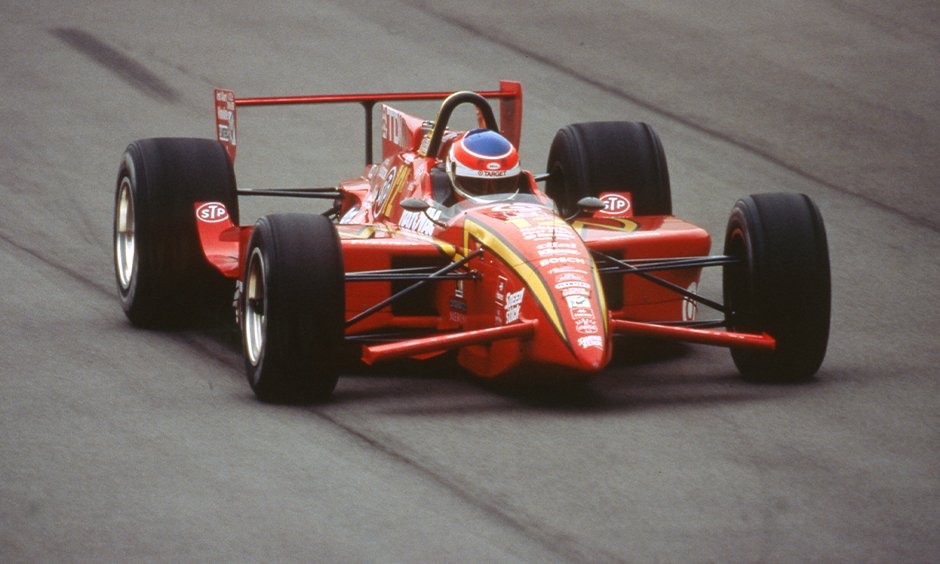
Chip Ganassi Racing entered the race being the first major CART team to enter the “500” since the split and eventually ended up taking the victory in the Brickyard with Juan Pablo Montoya in what would be his last season in America’s open-wheel circuit before moving to Formula 1 with BMW Williams.
- The Beginning of The End for CART
CART started struggling when entering the the new millenium, the CEO Andrew Craig ended up leaving the championship at mid season and was replaced by Bobby Herta.
During this time, CART decided to set a free space in its calendar during memorial day, allowing CART teams to race in the Indy 500 for the first time since 1995.
Also, this season marked the ending of Daimler Chrysler in America’s open wheel circuit, as they shut down their Mercedes-Benz CART Program and ended up moving to NASCAR through Dodge in 2001.
- Penske Leaves CART for IRL
As mentioned before, CART started a huge downhill after the year 2000, and specifically in 2001, it received massive hits.
Under the leadership of Joseph Heitzler, the cancellation of 2 races in Brazil and Texas, a disasterous european tour, the loss of the contract with ESPN/ABC, the departure of Nazareth and Michigan led to the loss of 2 the championship’s most iconic races and the last blow ended up being Roger Penske announcing the departure of Team Penske to join the Indy Racing League in 2002.
- The Ending Of CART.
In 2003, CART hosted its final season, under the name Champ Car World Series, and long gone were the prestigious high-action world series presented in the 90s and 80s, CART was losing money all the way around and eventually Ford became the only engine supplier for the championship.
Also, with more teams joining Chip Ganassi and Penske in the Indy Racing League, such as Andretti Green Racing and Mo Nunn Racing, this led to nine rookies in the season opener in St. Petersburg, as the big names of CART started leaving to join their teams in the IRL.
- Toyota and Honda Join the IRL.
Another of the massive blows that CART took was the loss of Toyota and Honda.
Ford became the only engine supplier for 2003 as Toyota and Honda decided to join the growing Indy Racing League taking over Infiniti’s spot as the brand shifted it’s efforts to the new Infiniti Pro Series, which would eventually become what we now know as the Indy NXT.
- The IndyCar Series is born.
In 2003, following the bankruptcy of CART, the Indy Racing League officially rebranded itself as the IndyCar Series.
This change came after the expiration of a legal restriction previously imposed by CART, which had prevented the use of the “IndyCar” name.
That same year, the series held its first international race, taking over CART’s former event at Twin Ring Motegi in Japan.
Renamed the “Indy Japan 300,” the race was won by Scott Dixon, who would go on to claim his first of six IndyCar championships, finishing the season ahead of Gil de Ferran.
- The “Champ Car” Era.
CART eventually fell into bankruptcy in 2003, and in 2004, the championship re-emerged as the Champ Car World Series, a derivative of the Champ Car terminology used in the years prior, when they lost the option name themselves.
The new championship was owned by three former team owners, Gerald Forsythe, Kevin Kalkhoven, and Paul Gentilozzi, due to the loss of tv broadcasting from ESPN and ABC, SpikeTV took over to broadcast the championship.
2004 would also be the last year we would see a Reynard chassis, as Reynard’s bankruptcy in 2002 stopped any further development in the Reynard O2I and was heavily pushed back against the Lola B02.
- The Indy Racing League merges with Champ Car.
After years of division between two rival championships, the long-awaited reunification of American open-wheel racing finally took place in February 2008. Champ Car and the Indy Racing League reached an agreement to merge into a single series, forming the new IndyCar Series.
The unified championship was built around the existing IRL schedule, with six of the nine remaining Champ Car teams transitioning to IndyCar under a support package that included free Dallara chassis and Honda engines to help ease the move.
This merger marked the end of the Panoz DP01 chassis and Cosworth as an engine supplier in American open-wheel racing. More importantly, it revitalized public interest in the sport, bringing back attention and excitement that had faded during the split.

The unified series helped launch the broader appeal of drivers like Hélio Castroneves and Danica Patrick, who became mainstream celebrities featured in TV shows, commercials, and magazines.
The 2008 merger effectively ended the 13-year battle between CART/Champ Car and the Indy Racing League, paving the way for a stronger, more unified future for IndyCar.
- The Lasting Damage
In the final years of the split, both Champ Car and the Indy Racing League were losing ground as NASCAR surged in popularity and Formula One gained more international attention.
This shift left American open-wheel racing struggling to maintain its audience. Attendance at most events steadily declined for both series, with only the Indianapolis 500 continuing to draw significant crowds.
It led many to question the purpose of maintaining two rival championships, especially when they both came together for the Indy 500. “If they still race each other at Indy, why remain divided?” became a common sentiment among fans.
Some argue that the IRL ultimately “won” the battle by outlasting its rival, while others claim CART’s model proved more sustainable and influential, with many of its principles still reflected in today’s IndyCar Series. But the truth is more sobering, no one truly won.
The prolonged division inflicted lasting damage on the sport. Even today, the unified IndyCar Series continues to face challenges in attendance and exposure at certain events, falling short of the heights reached during its golden era in the 1980s and early 1990s.
The scars of the split remain, and the sport is still on the long road to fully recovering its once-dominant status in American motorsports.
written by Diego Sedano // Media Credit: Penske Entertainment