
ADVENT CALENDAR DOOR 17 – From Debuts to Dreams: The Journey of Car #17
In IndyCar history, some car numbers are instantly recognizable. Others, like car number 17, may not carry decades of glory, but they still hold unique and meaningful moments.
Over the years, #17 has been driven by a variety of competitors, some trying to make a name, others writing the first chapters of a much bigger story.
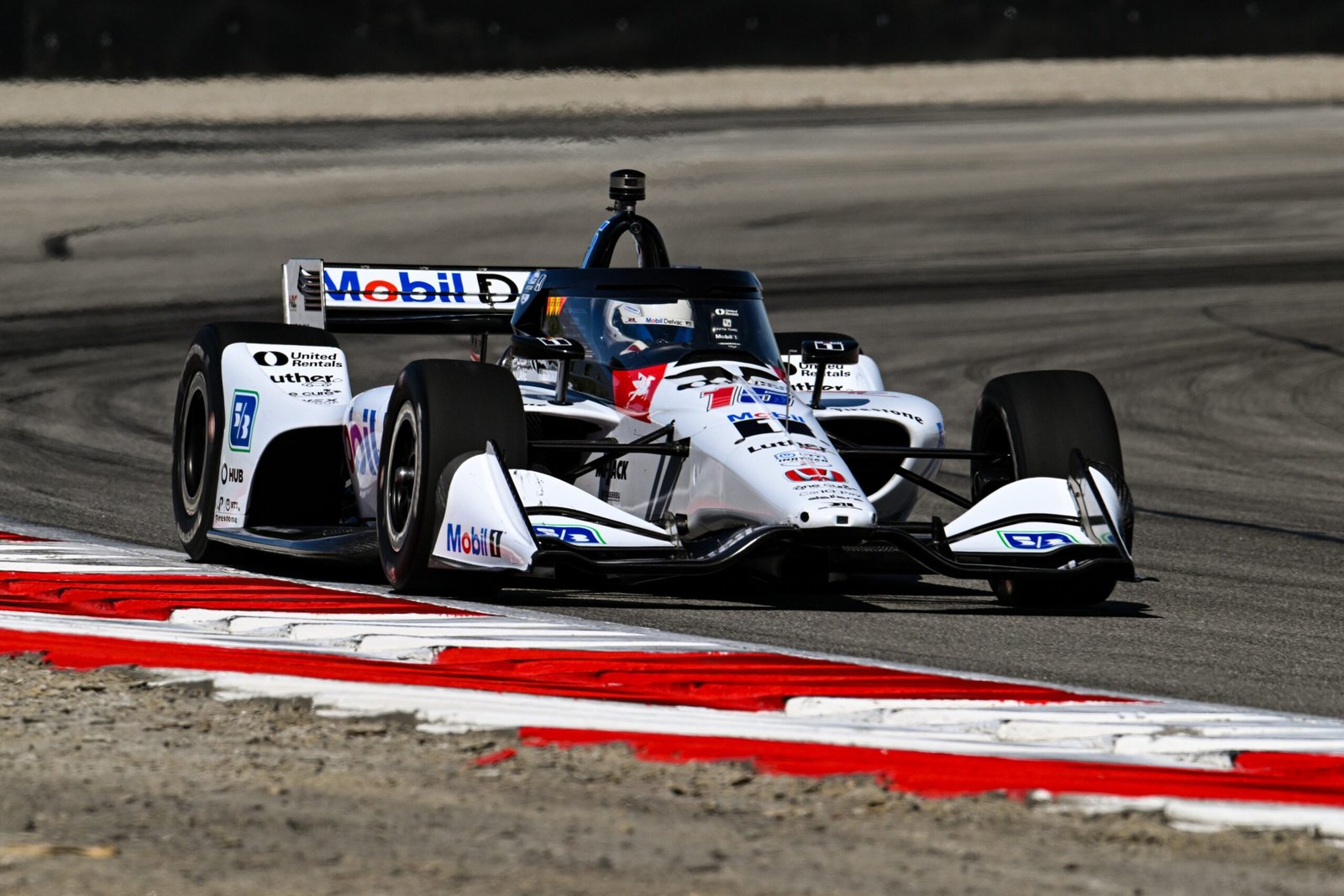
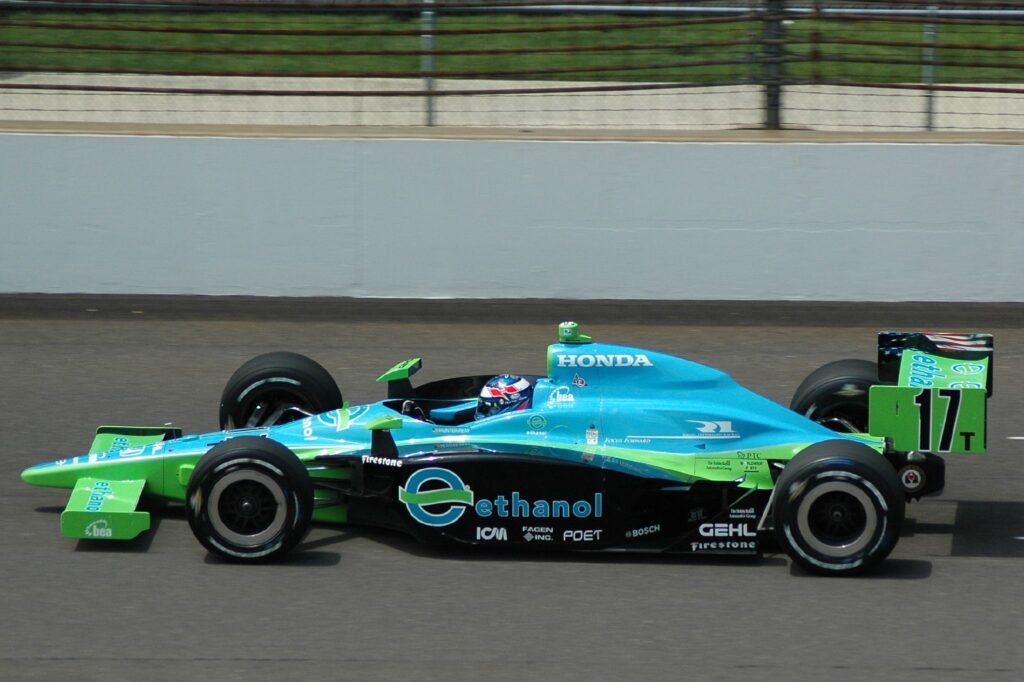
One of the most notable drivers to race with number 17 was Ryan Hunter-Reay. Long before becoming IndyCar Series Champion in 2012 and an Indy 500 winner in 2014, Hunter-Reay made his IndyCar debut in 2007 with Rahal Letterman Racing, driving the #17 Honda.
Joining the team mid-season, he immediately made an impression by finishing seventh in his very first race at Mid-Ohio. He went on to claim a Rookie of the Year title despite competing in only a partial season, thanks to consistent performances and a sixth-place finish at Michigan.
That short stint in the 17 car helped launch a career that would later reach the highest levels of the sport.
Unsung Entries and Hidden Highlights
The number 17 has appeared occasionally on the grid, often as part of short-term efforts by teams running extra entries or giving opportunities to rising drivers.
Teams like Rahal Letterman Lanigan have used it in various seasons as an additional car when their program expanded. In these cases, the car was often a platform for testing new talent or adding depth to the race strategy, even if it didn’t regularly fight for wins.
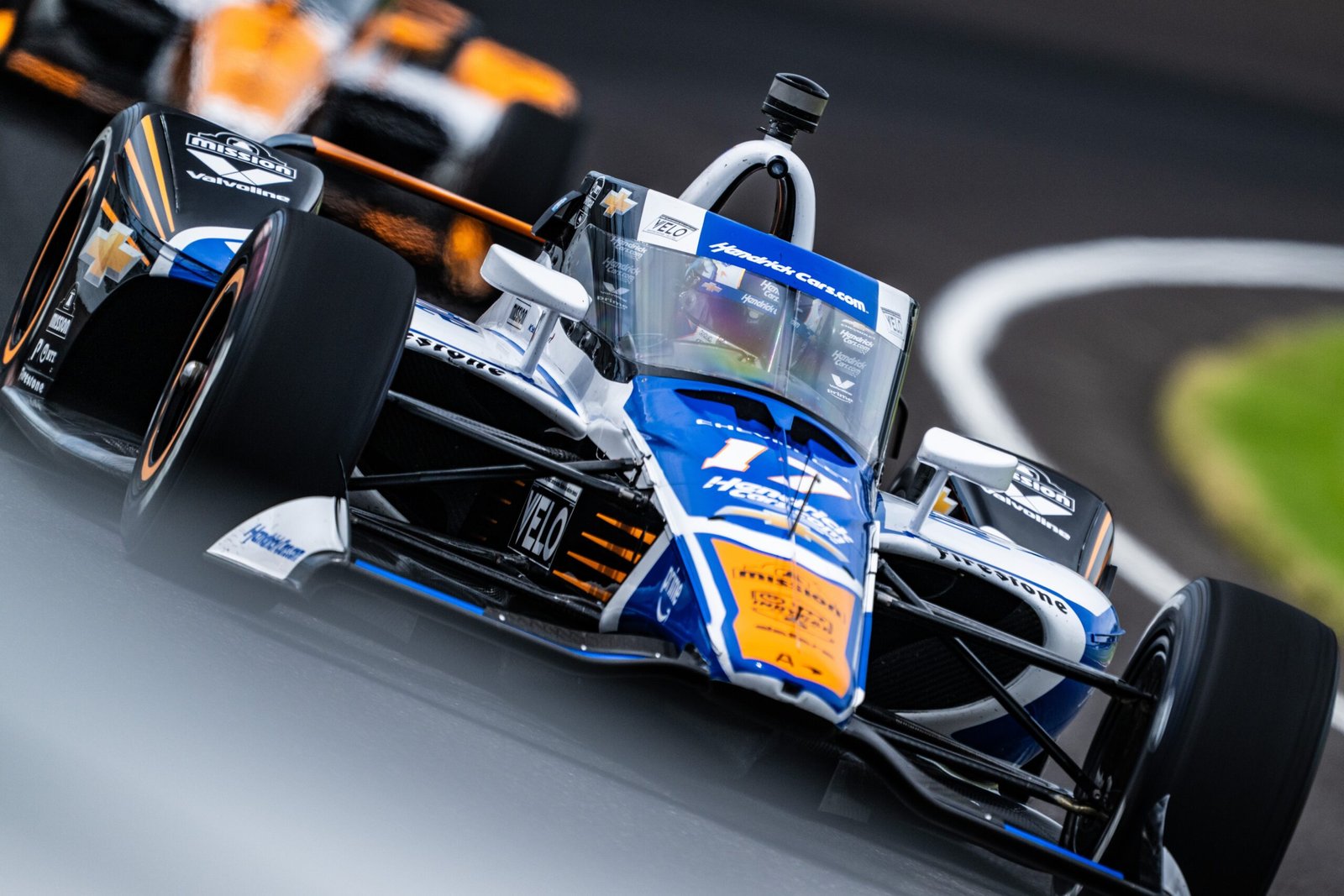
One of the most high-profile and recent uses of car number 17 came in 2024 and 2025, when NASCAR superstar Kyle Larson made his long-anticipated Indianapolis 500 appearances with Arrow McLaren.
Driving the #17 entry as part of a special collaboration between McLaren and Hendrick Motorsports, Larson’s participation brought massive crossover appeal and media attention.
Kyle Larson took part in the Indianapolis 500 for the first time in 2024, driving for McLaren Racing. He started the race from fifth position, was named Rookie of the Year, and finished a turbulent race day in 18th place, having led four laps during the event.
In 2025, he competed in the Indianapolis 500 again, and once more attempted to complete “The Double,” but his effort ended prematurely. He qualified 21st, suffered a crash during practice, and retired from the race after just 91 laps following another accident, which ultimately ended his attempt at completing the Double.
While he didn’t contend for the win, his use of the #17 car helped breathe new life into a number with deep roots in IndyCar history, bridging fanbases and creating unforgettable moments at the Brickyard.
The number has also been seen in efforts that were ultimately withdrawn or restructured, like planned entries at certain races that never made the grid due to budget, strategy, or logistical changes.
These moments reflect the fast-moving nature of motorsports, where not every story is one of victory, but every car on the grid plays a role in the bigger picture.
As we open door number 17 of our Advent calendar, we celebrate the car number that quietly supported breakthrough moments, early-career opportunities, and the dreams of drivers who stepped in hoping to make their mark.
Whether it was a single race or the beginning of something bigger, the story of #17 reminds us that every number has a legacy.
written by Philipp Kraus // Media Credit: Penske Entertainment