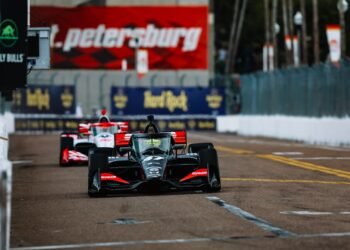


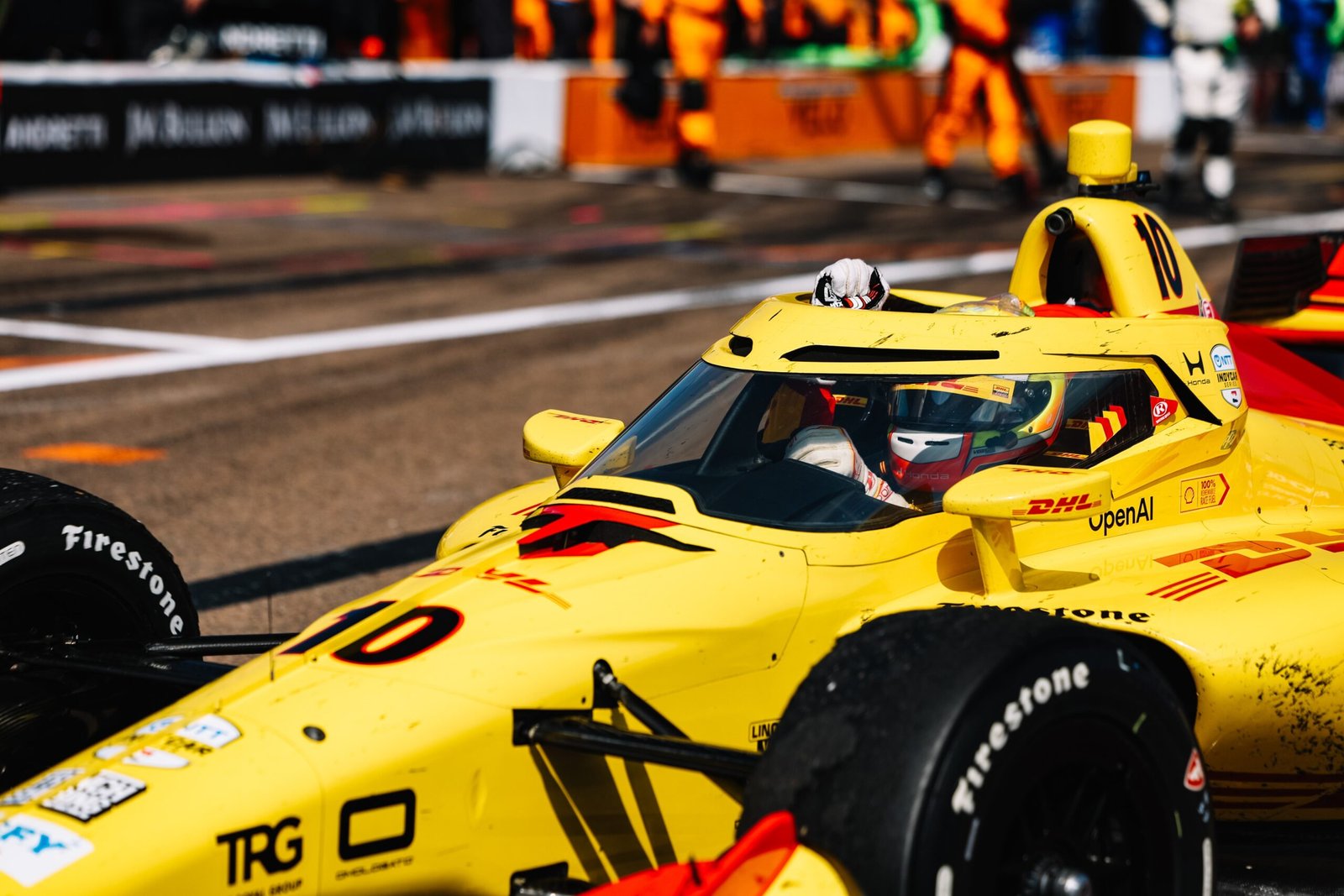
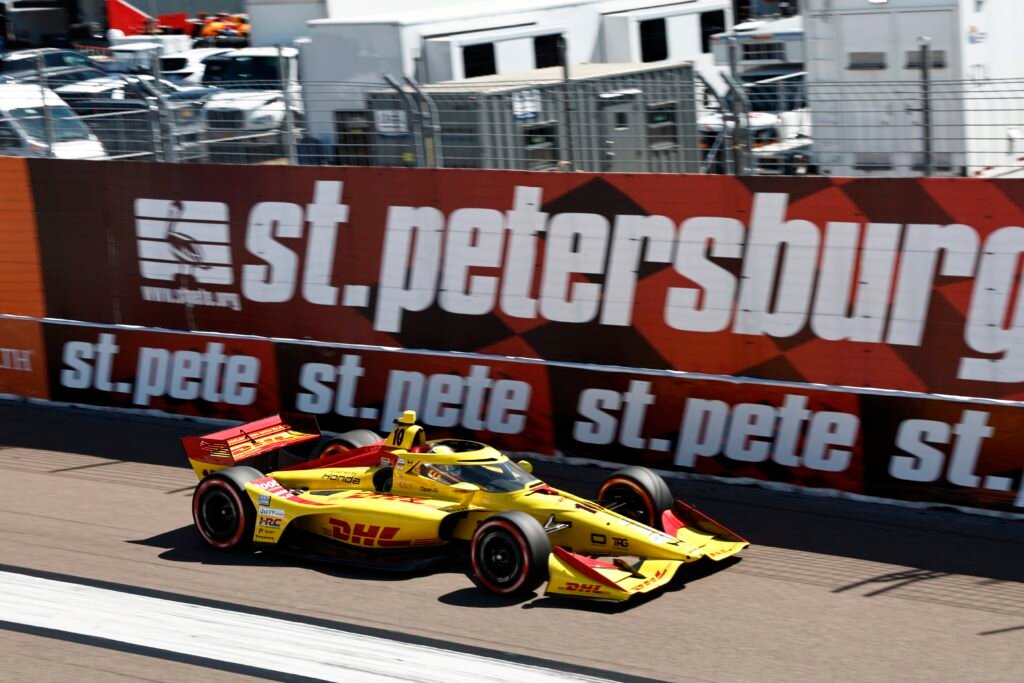
The 2026 season began the same way like 2025. On a sun-soaked afternoon along Florida’s Gulf Coast, the reigning series champion Alex Palou delivered a clinical, strategically precise performance to win the Firestone Grand Prix of St. Petersburg. Driving the No. 10 DHL Honda for Chip Ganassi Racing, Palou secured his 20th career victory in just his 99th start, defeating Scott McLaughlin by a commanding 12.4948 seconds.

For a driver who claimed his third consecutive and fourth overall IndyCar championship last season by an extraordinary 196-point margin, the message was clear: the standard has not dropped.
“This team keeps on improving, keeps on making new changes, and they just keep on raising the bar,” Palou said after climbing from his car in Victory Lane. “It’s a long season in front of us, but what a great way to start the season.”
The 100-lap race around the 14-turn, 1.8-mile temporary street circuit unfolded with a strong strategic undercurrent, amplified by a new INDYCAR rule mandating the use of at least two sets of the softer Firestone Firehawk alternate tires.
From the outset, tire strategy was poised to determine the outcome.
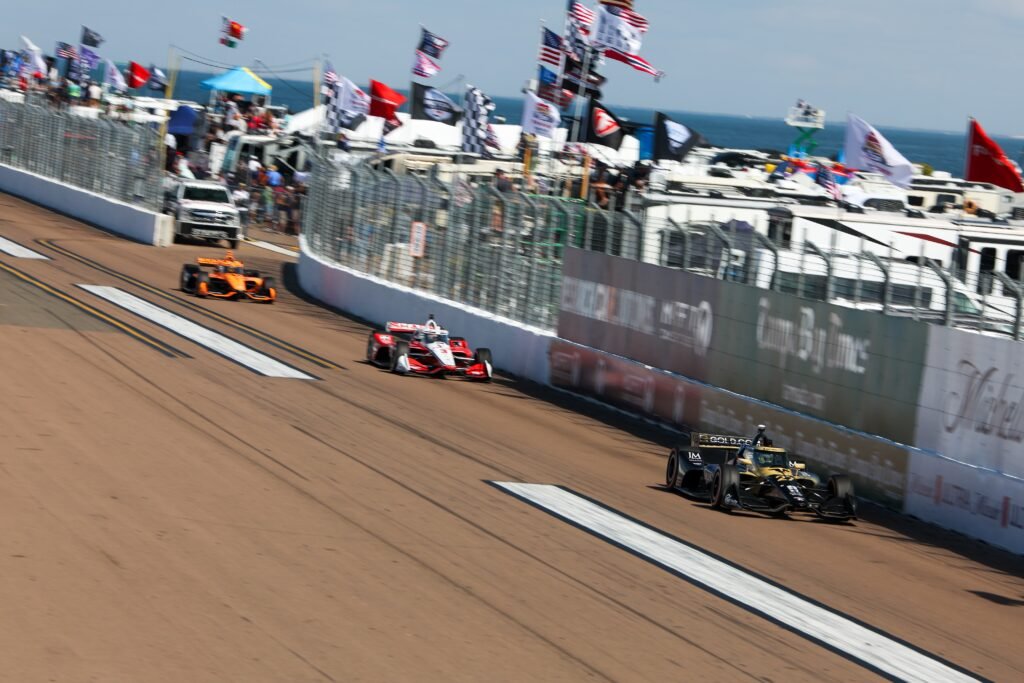
McLaughlin, who started from pole in the No. 3 DEX Imaging Chevrolet for Team Penske, controlled the early portion of the race. Behind him, Palou methodically maintained contact, conserving tires and studying the unfolding rhythm of pit sequences.
The decisive phase arrived during the first cycle of green-flag stops.
McLaughlin pitted at the end of Lap 35. One lap later, Marcus Ericsson briefly assumed the lead before heading to pit lane himself. Palou’s strategist Barry Wanser then made the pivotal call to extend Palou’s stint on used alternate tires, executing an “overcut” strategy that allowed the Spaniard to remain on track two laps longer than his primary rivals.
When Palou exited the pits after Lap 38, he rejoined ahead of both McLaughlin and Ericsson. By Lap 42, once the field had cycled through stops, the No. 10 Honda was firmly in command.
He would lead 59 of the 100 laps.
Podium Battles and Late Drama
If the overcut delivered track position, the final stint added intrigue.
On Lap 67, Palou pitted for the final time holding a 14-second advantage. Having already used two sets of alternate tires, he switched to the harder primary compound for the run to the finish.
Behind him, McLaughlin and Kyle Kirkwood gambled on the faster alternate tires for their final stints, hoping to erase the deficit.
For several laps, the prospect of a late-race charge lingered. Kirkwood briefly narrowed the gap to 5.5 seconds. McLaughlin’s pace was similarly aggressive.
But Palou’s consistency and tire management extinguished the threat.
“Those Firestones were like everlasting,” Palou said. “They would just keep going. I had an amazing car today.”
Instead of fading on the harder compound, Palou extended his advantage, ultimately claiming the largest winning margin in the 23-year history of the St. Petersburg event.
While the win was decisive, the fight for the remaining podium positions intensified in the closing stages.
With 10 laps remaining, fresher alternate tires allowed McLaughlin and Christian Lundgaard to attack Kirkwood. On Lap 94, both drivers executed decisive passes, relegating the Andretti Global driver to fourth.
McLaughlin settled for second, reflecting afterward on the complexities of tire strategy.
“Our Chevy was fast, but it’s just a mixed bag on what tire you start on,” he said. “Overall, we maximized our day.”
Lundgaard’s surge from 12th on the grid to third represented one of the standout drives of the afternoon. The Arrow McLaren driver demonstrated composure through traffic and capitalized on tire life when it mattered most.
Teammate Pato O’Ward rounded out the top five, ensuring a double top-five finish for Arrow McLaren.
Further back, rookie Dennis Hauger impressed in his series debut. After qualifying third, the Dale Coyne Racing driver navigated a challenging afternoon to secure a top-10 finish, marking him as one to watch in the 2026 campaign.
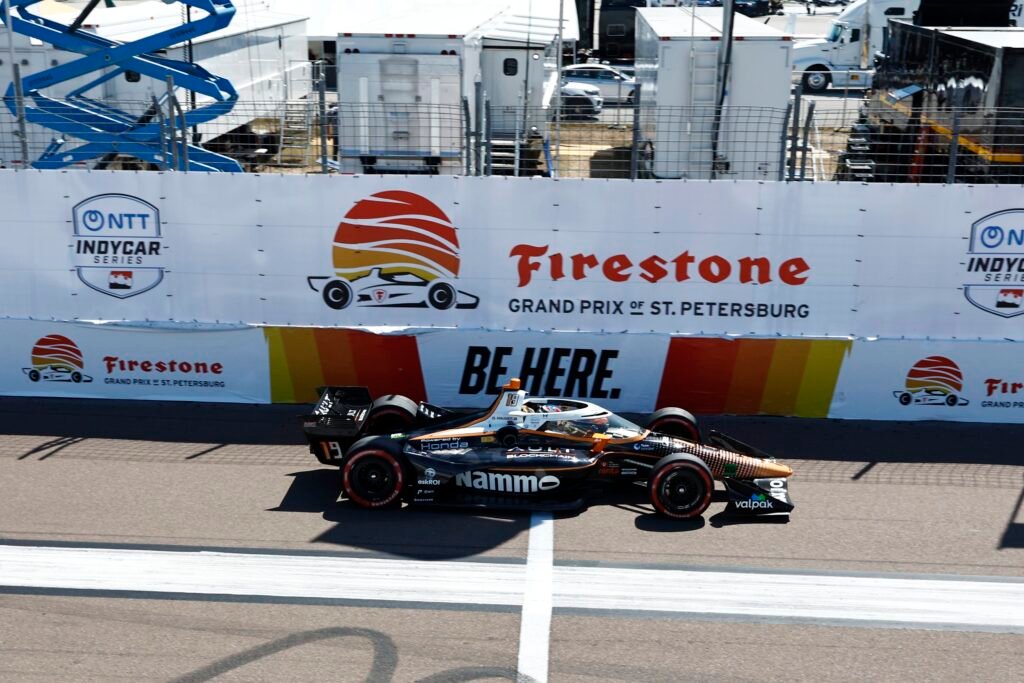
Tire degradation also added complexity to the race. The mandatory use of two alternate sets forced teams to balance outright speed against longevity. Some opted to “get the reds out of the way” early, while others staggered their usage to preserve flexibility.
In the end, no strategy matched Ganassi’s precision.
Looking Ahead to Phoenix
The next chapter unfolds quickly. The NTT INDYCAR SERIES heads west for the Good Ranchers 250 at Phoenix Raceway on March 7, part of the Desert Double weekend. The one-mile oval will present a dramatically different challenge from the tight confines of St. Petersburg’s street circuit.
The champion opened the season the way champions often do: not just by winning, but by controlling the race from start to finish. And in Phoenix next weekend, the rest of the field is chasing Alex Palou again.
written by Philipp Kraus // Media Credit: Penske Entertainment