

For David Malukas, the first official INDYCAR open test at Phoenix Raceway was never meant to be about topping the timing charts. It was meant to be about understanding. Understanding a new car, a new team, and a new competitive environment that represents the most significant opportunity of his career.

Yet when the first day concluded, Malukas had quietly delivered something more than progress. He had delivered pace.
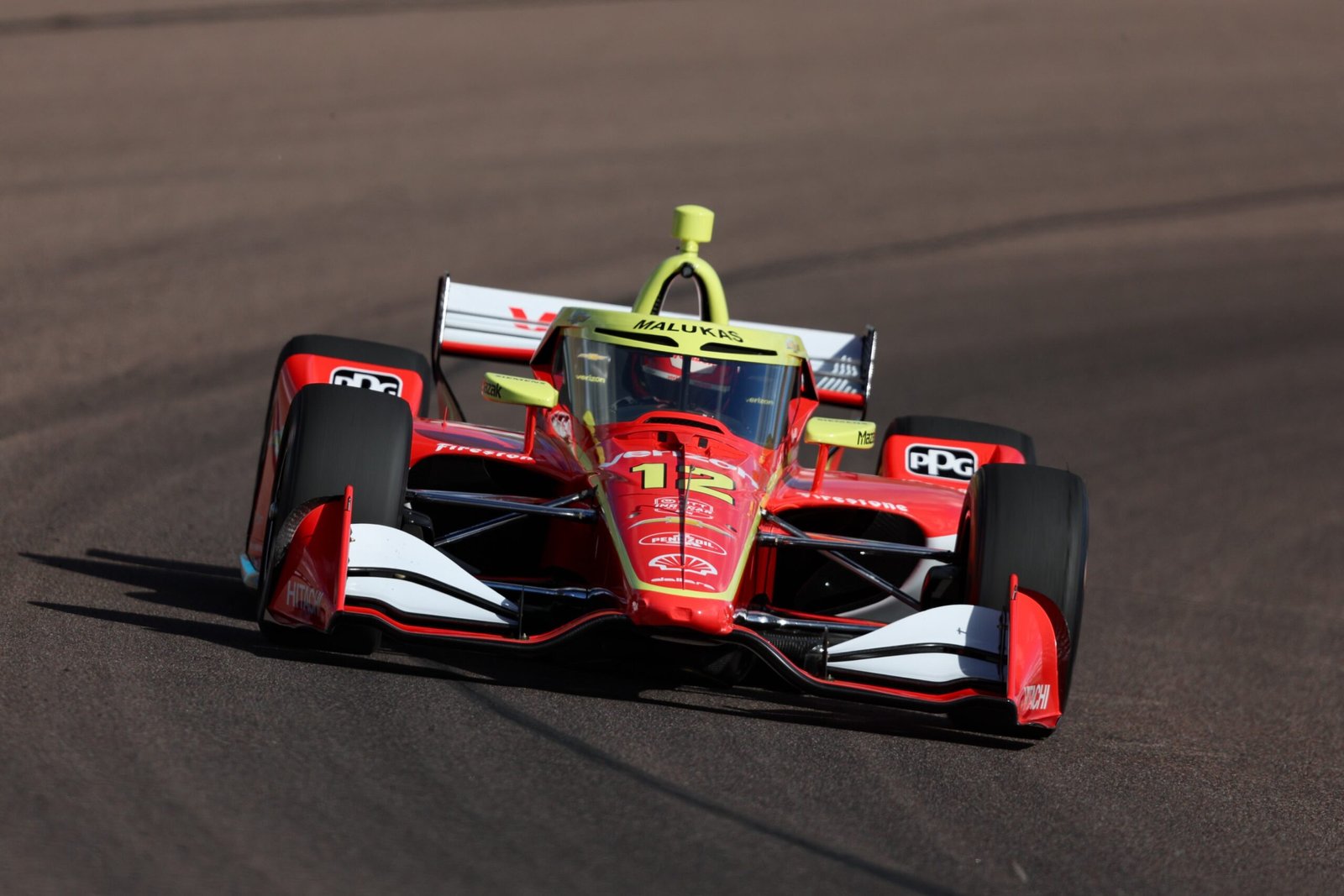
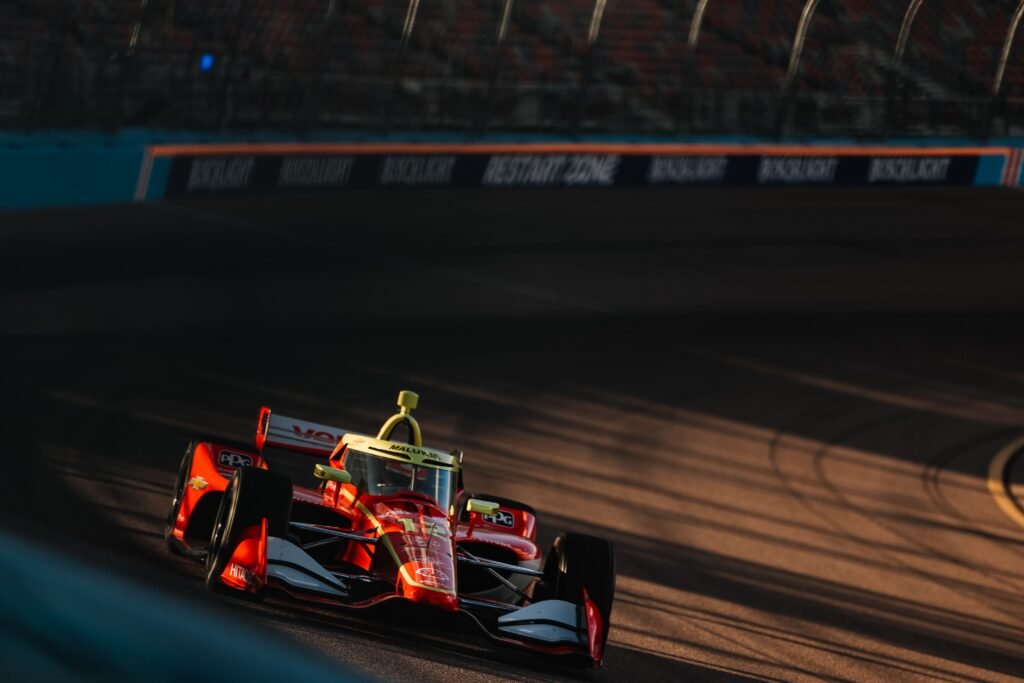
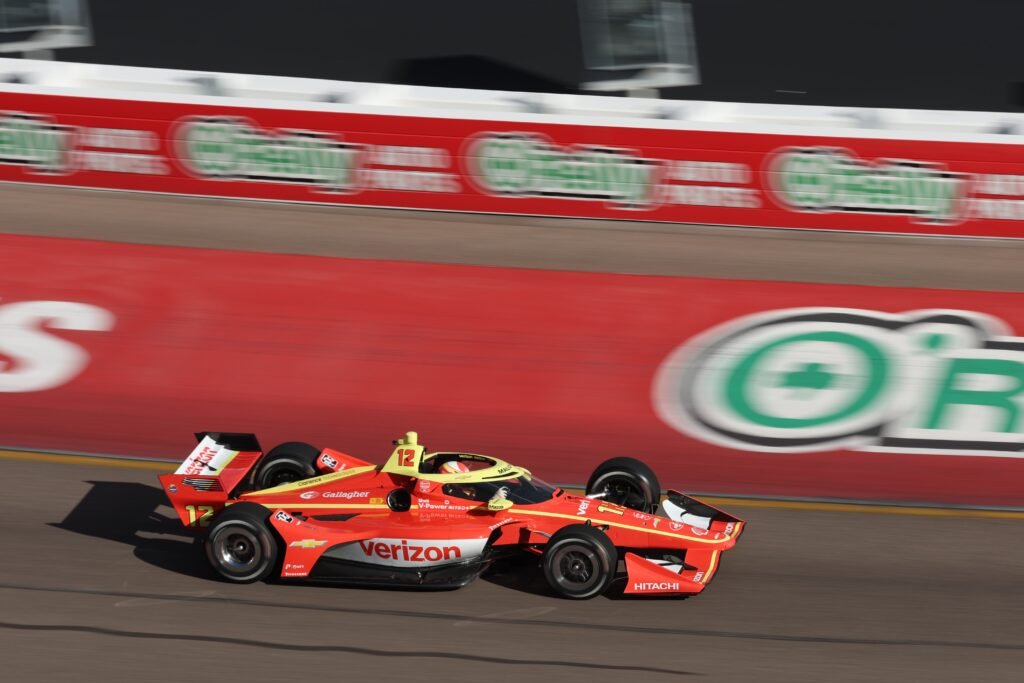
Driving the No. 12 Verizon Chevrolet for Team Penske, Malukas ended the opening day of the test at the top of the leaderboard, setting a fastest lap of 172.605 miles per hour. It was a result that reflected not just speed, but comfort. And perhaps more importantly, trust.
“I love it,” Malukas said of Phoenix Raceway. “Very, very nice. For me, so far, very good day. Enjoyed it.”
Those words carried weight, because Phoenix represented more than just another oval. It represented the first real benchmark of his integration into Team Penske’s system.
A Track That Rewards Feel and Precision
Phoenix Raceway presents a unique technical challenge, even within the already demanding context of INDYCAR oval racing. Unlike more symmetrical ovals, its corners demand compromise, forcing drivers and engineers into a constant balancing act between opposing characteristics.
Malukas immediately recognized those nuances.

“The difference between one and two and three and four, it’s almost giving me similarities to Gateway,” he explained. “Trying to get the car setup how you like it in that short time frame, it’s a game.”
That comparison matters. Gateway has long been one of Malukas’ strongest circuits, a place where he established himself as one of INDYCAR’s most capable oval racers. The similarities allowed him to adapt quickly, relying on instincts developed over years of short oval competition.
Yet Phoenix introduces its own layer of complexity. The rapid transition between corner types forces drivers to make constant adjustments, both mechanically and mentally.
“Every lap it’s almost like you’re changing, changing, changing,” Malukas said. “For me, it keeps my mind busy. I love it.”
That constant demand for adjustment aligns with Malukas’ driving philosophy. He thrives in environments where adaptability becomes an advantage rather than a burden.
Despite finishing first on the timing sheets, Malukas was careful not to overstate the significance of the result. Test days, by their nature, prioritize development over competition.
“I think it’s hard for test days because you’re running through your own plans,” he said. “But of course, it feels good. We know that we have pace. The car is good.”
That distinction reveals the maturity of his approach. The lap time itself was secondary. What mattered was the process behind it.

Team Penske’s testing program is built on precision and efficiency. Each run serves a defined purpose, each adjustment a calculated experiment. For Malukas, integrating into that structure required both confidence and humility.
The speed came naturally. The understanding took intention.
Perhaps the most telling insight from Malukas’ first day at Phoenix had little to do with lap times and everything to do with environment.
“This is the best I’ve felt in a very long time,” he said. “The chemistry I have with the guys, the team, I’m just so happy.”
That statement reflects a deeper transformation. Drivers often speak about performance in terms of machinery and engineering, but the psychological dimension is equally critical. Confidence within the team environment enables drivers to push limits without hesitation.
Malukas described the experience in simple terms.
“Every time I come in and out of the pits, I’m smiling. It’s a dream for me.”
At Team Penske, where expectations are measured in championships rather than participation, that sense of belonging matters. It creates stability. It accelerates learning. It builds trust.
Learning From Experience Within the Team
One of the defining advantages of Malukas’ new environment is the presence of veteran teammates with extensive oval experience. The collaborative dynamic between drivers allows the team to accelerate development through shared data and feedback.
“The amount of data that we’re looking at and comparing,” Malukas explained. “If Josef makes a change and it’s good for him, I know it’s going to be good for me.”
That trust multiplies the effectiveness of every test session. Instead of relying on isolated feedback, Team Penske operates as a unified system, distributing development responsibilities across multiple drivers.
“With three cars, you can run through more test items,” Malukas said. “That’s the dream.”
For a driver entering his first full season with the organization, that level of support provides an invaluable competitive foundation.
Team Penske’s reputation for technical excellence is not built on perception alone. It is built on infrastructure, personnel, and relentless attention to detail.
Malukas experienced that firsthand during his first Phoenix test.
“This is the best environment I’ve truly been in,” he said. “So many smart guys. Everybody is working 110 percent in their sector.”
That collective effort transforms individual performance into organizational strength. Each engineer, mechanic, and strategist contributes to a system designed to maximize competitive potential.
For Malukas, adapting to that environment has accelerated his development curve.
Building Momentum Early in the Season
Even for an experienced oval racer, Phoenix delivers a unique physical and sensory challenge.
“It’s very, very fast,” Malukas said. “You keep pushing the car, and you realize how much grip it has.”
That sensation of discovering performance potential lap by lap defines the testing experience. Drivers begin cautiously, gradually expanding their limits as confidence builds.
Malukas admitted that even observing teammates initially raised questions.
“I saw Josef put a time up, and I thought, I don’t know how he’s doing that,” he said. “But you keep pushing, and you realize the car can take it.”
That realization marks the moment when adaptation becomes performance.
Phoenix’s placement early in the INDYCAR calendar adds another layer of importance. Unlike previous seasons with extended gaps between races, the compressed schedule allows drivers to build rhythm quickly.
“You can build that rhythm early on,” Malukas said. “Especially with a new team, it helps a lot.”
Momentum, in INDYCAR, is both psychological and technical. Early confidence influences decision-making, while early data informs development.
For Malukas, Phoenix provided both.
By the end of the first day, Malukas had accomplished what mattered most. He had integrated into Team Penske’s system. He had demonstrated pace. And he had reinforced his belief that he belongs at the front of the INDYCAR field.
Yet perhaps the most significant outcome was not the lap time itself, but the environment surrounding it.
“I’ve been loving every minute,” he said.
And today he will be able to run again as IndyCar prepares for the second day of testing at Phoenix.
written by Philipp Kraus // Media Credit: Penske Entertainment