
“If we fall in fewer potholes, we’re going to be better” – Josef Newgarden on the 2026 Season

For Josef Newgarden, the start of the 2026 IndyCar season does not feel like a comeback tour, a revenge arc, or a grand reinvention. It feels, in his own words, like work. Focused work. The kind that begins long before the first green flag and has little patience for nostalgia.
Speaking at Media Day, Newgarden was candid, occasionally dryly humorous, and unmistakably clear about where he believes the difference between success and frustration lies this year. Consistency. Process. And avoiding mistakes that have nothing to do with raw speed.
“If we don’t want to finish 12th in the standings, we’ve got to finish more races,” he said. The line landed without drama because it did not need any.
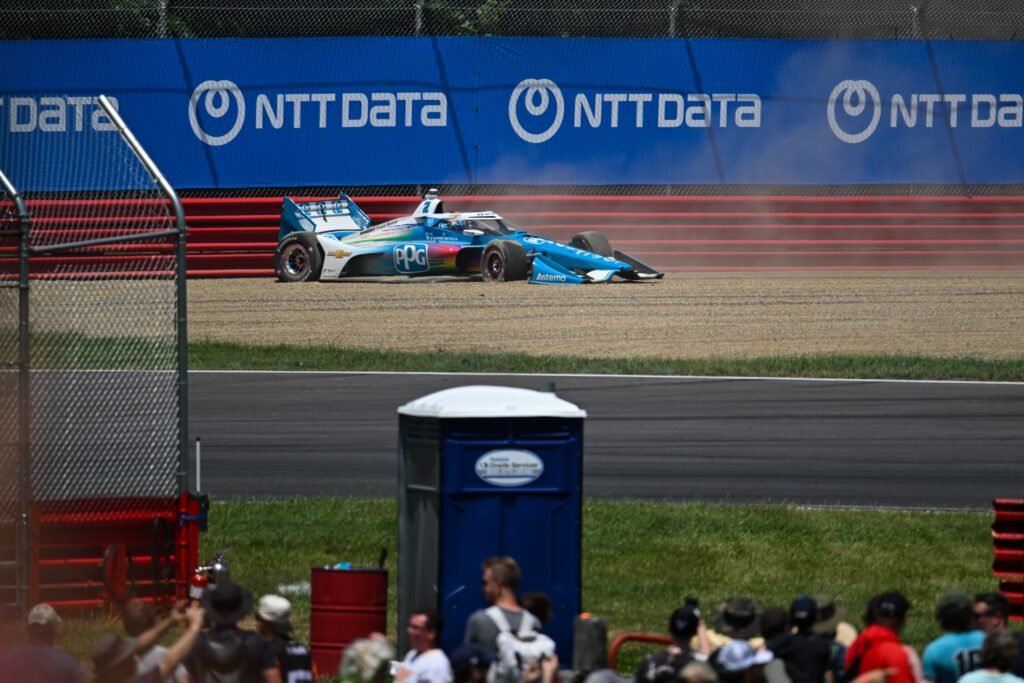
Last season was Newgarden’s lowest championship finish since 2014. For a driver who has built a reputation on execution, adaptability, and relentless standards, that result still lingers. Not as a scar, but as a reference point.
The solution, in his view, is not radical change for the sake of optics. It is refinement.
“To be more consistent,” Newgarden explained. “We just can’t have as many bad results as we had. There’s a lot of them that could have been different. They’re not. So we’ve got to focus on being more consistent.”
That clarity of diagnosis sets the tone for everything Newgarden discussed about 2026.
At Team Penske, the off-season has been defined less by upheaval and more by introspection. Newgarden described the core of the organization as unchanged, the heart of the team still very much intact. At the same time, he acknowledged that structure, workflow, and communication are being subtly adjusted.
“Some of the way we do things will be a little bit different,” he said. “A new workflow. A different cadence on race weekend.”
It is not the language of a team panicking. It is the language of a team that expects more from itself.
Change, Newgarden emphasized, can be a positive force if it sharpens execution rather than distracting from it. Penske, in his view, remains Penske. The standards are still uncompromising. The accountability still internal.
Being the Veteran Driver on the Team
That accountability now rests more heavily on Newgarden’s shoulders than ever before. Fifteen seasons into his IndyCar career, he is no longer the young driver learning from veterans like Helio Castroneves, Juan Pablo Montoya, or Simon Pagenaud. He is the reference.
“I am the old guy,” he said with a laugh. “I can’t believe I’ve been doing this for 15 years.”
Yet the role sits comfortably with him. Newgarden has always possessed a strong internal compass. He described it as having the same projection in his voice now as when he was younger, just informed by experience rather than ambition alone.
That experience shapes how he views the competitive landscape heading into 2026. There is no illusion of an easy path back to the top. The field is deep. Margins are thin. Every team arrives prepared.
“Everyone’s good,” he said. “Nothing’s easy these days. We’ve all got to work hard to be where we want to be.”
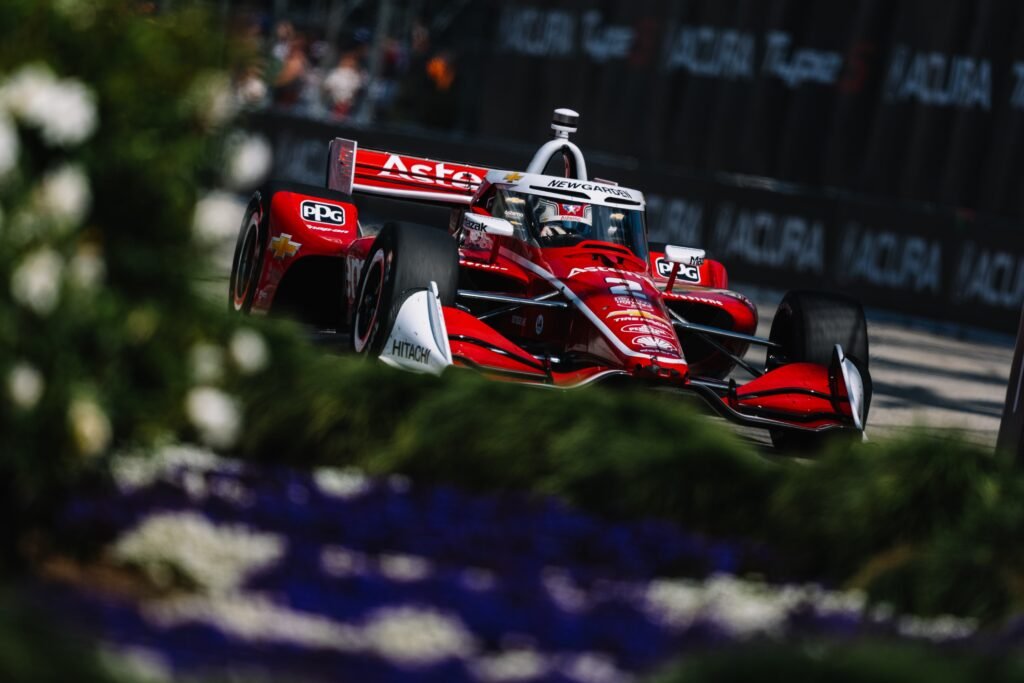
The calendar itself reinforces that reality. New venues like Arlington and Markham add uncertainty, while Phoenix returns as a critical early-season test with more questions than answers. Newgarden was frank about how little the earlier Phoenix test revealed.
“It was freezing,” he explained. “There was no track grip. We weren’t trying to run the second lane. I have no idea.”
“I was just happy the year was over”
That uncertainty does not frustrate him. It motivates him. Newgarden is a process thinker, and Phoenix represents exactly the kind of variable that rewards preparation under pressure. He spoke at length about the importance of testing conditions that simulate real race scenarios rather than chasing isolated data points.
“The only way you’re going to understand how something is going to race is to run a race situation,” he said.
That philosophy extends beyond Phoenix and into how Newgarden views the season as a whole. There is no carrying momentum from one year to the next. No emotional credit for past wins. Even his Nashville victory last season, while satisfying in the moment, does not carry forward in his mind.
“I don’t think Nashville really does anything,” he admitted. “I was just happy the year was over.”
For Newgarden, every season begins with a hard reset. St. Petersburg will be no different. The past is informational, not inspirational.
Amid all of this, one of the most intriguing storylines within Team Penske for 2026 is the arrival of David Malukas. Newgarden did not hesitate when asked about his new teammate’s potential.
“I think little Dave is going to be great,” he said. “He’s smart. He’s fast. He’s definitely got the capability to win races.”
The praise was not generic. Newgarden acknowledged the pressure that comes with a Penske seat and the skepticism that inevitably surrounds any new addition to such an established organization. He also made it clear that Malukas will have access to everything Penske can offer.
“We’ve always been an open-book team,” he said. “Whatever tool, whatever insight, information to maximize yourself, you’re going to have it available.”
In Newgarden’s eyes, the equation is simple. Opportunity is provided. Performance decides the outcome. Sink or swim.
Focus on St. Petersburg
That same philosophy applies to Newgarden himself. Asked about future opportunities or long-term plans, he refused to engage in hypotheticals. His focus is narrow by design.
“Right now for me that’s St. Petersburg,” he said. “That’s my focus.”
It is an answer that encapsulates his entire approach to 2026. No distractions. No narrative arcs. Just execution.
Even when discussing off-track life, including a demanding winter that included severe weather and the arrival of another child, Newgarden framed it through the same lens. Racing, he said, is almost on autopilot at this stage. The systems are in place. The preparation never really stops.
“The racing thing is kind of ready to rock,” he said.
What remains is avoiding the pitfalls that have undermined recent seasons. Newgarden summed it up with characteristic dry humor.
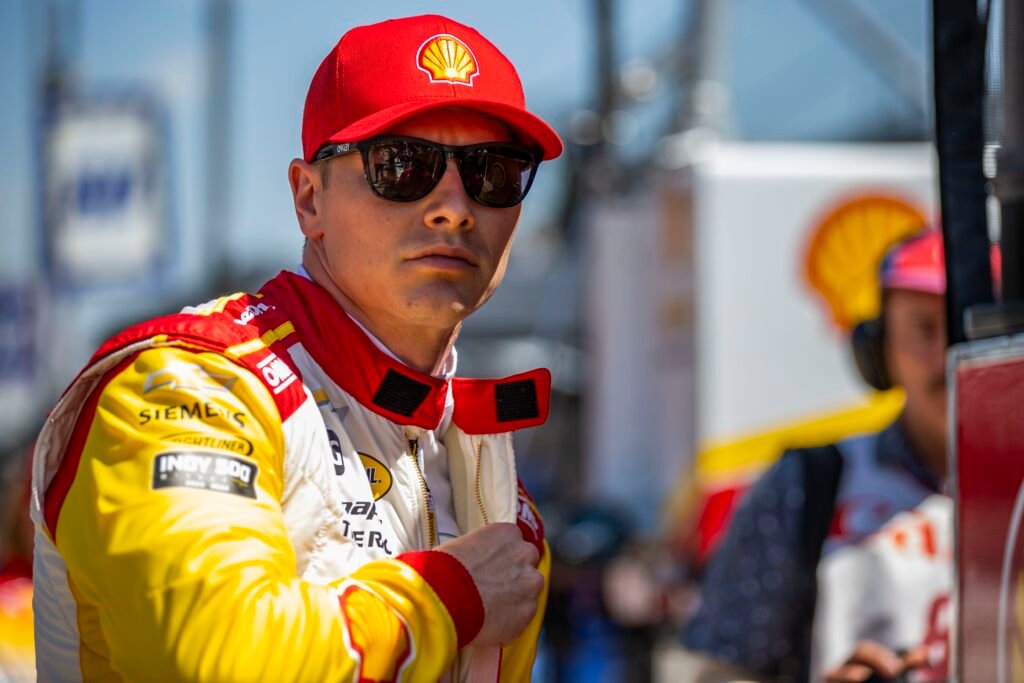
“I’ve got a pothole detector now,” he said. “If we fall in less potholes, we’re going to be better.”
It was a joke, but only just.
Because for Josef Newgarden in 2026, improvement is not about finding something new. It is about removing what should never have been there in the first place.
written by Philipp Kraus // Media Credit: Penske Entertainment
